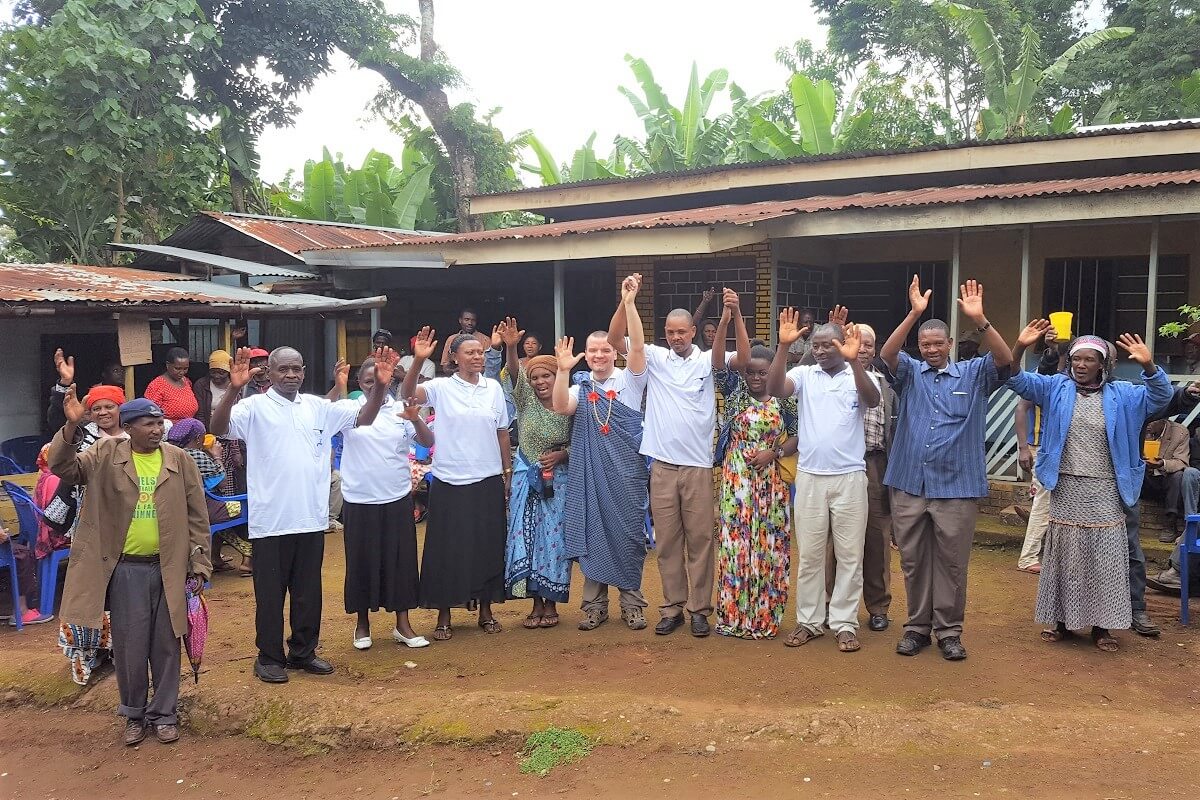
BBC radio interview today about the latest trip to Tanzania and Ian becoming a tribal chief.
To promote this interview, they took pictures and videos that Ian had recorded on location in Tanzania and turned it into this short video that was shared online.
Video Transcript
This is the first time Cecilia has used clean running water
She lives in Tanzania where Ian Meredith from Gloucester, gets his coffee.
He owns Ethical Addictions – an ethical coffee company.
He’s also been supporting long-term development for Mweka villages…
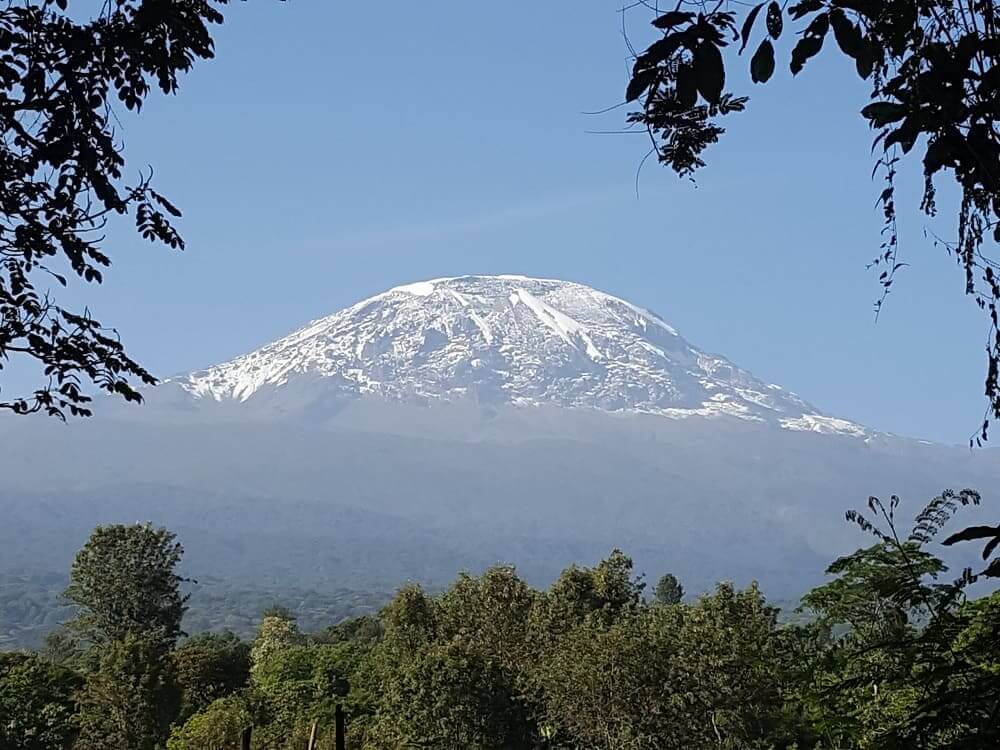
Like getting running water to people like Felicita, who live on Mount Kilimanjaro.
In 10 years, Ian says he’s witnessed huge changes in living standards.
Maji (water, in Swahili) is something we all take for granted here in the UK, yet it is essential to life, and our absolute privilege to live in a time and place where it is clean, drinkable and available all of the time at the turn of a tap.
And now this is something we are increasingly humbled to be a part of in Tanzania – providing fresh, clean drinking water to families on the beautiful Mt. Kilimanjaro.
The glacier is melting as we have witnessed with our own eyes, and an increasing population, combined with increased farming is putting greater demand on a dwindling resource.
Following the success of last year’s pipework to supply the Kichao village in Mweka, we have now been asked to help with a neighbouring project whereby 37 families have no clean water supply – the solution is to set-up storage tanks so that in times of less water they can fill up overnight in order to make supply the following day.
So we’ll be installing 2x 5,000 litre tanks similar to this in order to supply the village of Kifura Sawmill in Mweka.
Digging and preparation work is happening now and we should get some photos of completed work in the next few months. And I’ll be sure to see the work on my next visit myself.
Ethical Addictions is now 10 years old and I’m genuinely surprised and humbled that drinking good Kilimanjaro coffee would have led to this and the other things we get to do.
Thanks everyone for being part of this.
Here’s to making a difference together,
The Project Completed
Another succesful water project completed and another group of very happy villagers! Here is a short video of the first families turning on the taps!
Coffee trees and landscape can look beautiful in many countries but visiting for us isn’t just about photos – it’s the people, stories and relationships that matter.
We get to check farms for quality and environment; we get to see the workers and the direct trade green coffee beans but the relationships we form are increasingly becoming special friendships. The stories we are a part of have far more impact than we could have hoped for 11 years ago when we set out on this adventure.
I got back from Brazil only last week and I’m reflecting on the journey with this family – it keeps getting better and better. Not only do they produce great coffee, but their care of workers and environment is testimony to who they are as human beings. When we first bought coffee from Isaltino in 2010, his son Athos worked out the export paperwork and procedure to make it happen. That was the impetus for him to go on and establish his own export business with two others.
Not content with doing well for themselves, off the back of their own success they are helping other farmers, developing speciality coffee and increasing income for others too. With passion for speciality coffee Athos, Demilson and Herico are now looking up, literally 1000ft higher up, into the mountains at Jacutinga, where a small rural community have the potential to produce exceptional coffee if they can just be taught to invest the time in selective harvesting and better processing.
In partnership with them we are now looking at a project to invest in that community, to bring about sustainable incomes, higher standards of living and consistently fantastic coffee.
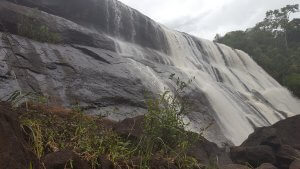
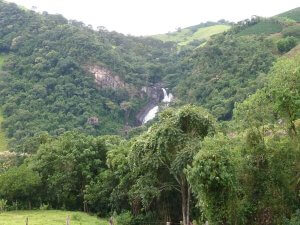
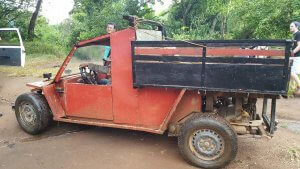
Travelling is rarely comfortable, but always an adventure, and the scenery can be stunning – check out the photos online.
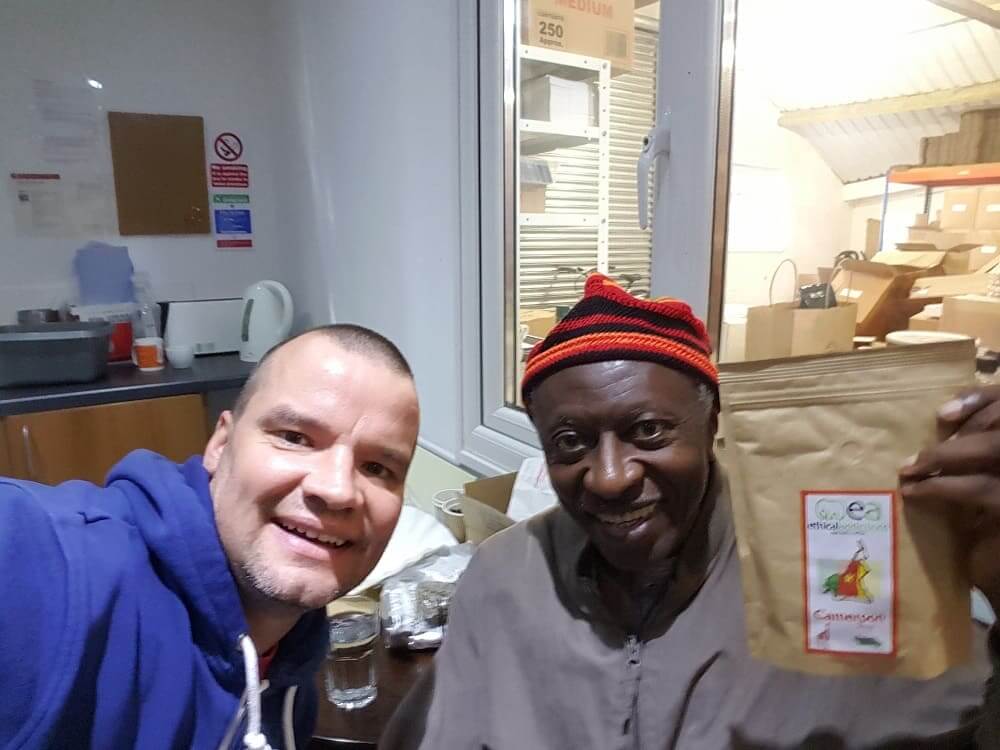
Matti Foncha came and visited us today in Gloucester. A coffee farmer himself, he also has a role representing his region and fellow farmers to develop trading relationships in Europe and North America.
He has a small company to export coffee and service the farmers but he’s a man on a mission. He understands that business can be a tool for the greater good, and not just for selfish gain.
We shared coffee, lunch, and more coffee whilst talking about crops for 2017 and the amazing work he’s doing to promote sustainability in the region, develop farming and encourage fairness and quality. He is building models and piloting ideas that will champion sustainability and change to hopefully secure farming and income for the next generation. What inspires me about this guy is he doesn’t need to. He could sit back on his farm and just do enough for himself, but he’s driven, even called, to more. We started with a small delivery of green coffee beans uk a while ago but are looking to build something with Matti that enables his arabica to join our single origin ranks.
We love this guy and his passion.
Next for EA & Cameroon? Another delivery in 2017 arranged by Matti for us, and then we need to grow demand so as it can become a mainstream option for our customers alongside Tanzania and Brazil. Then a visit, consider projects on the ground, and start to ship our own containter each harvest.
Do you remember we told you about Kichao village, Mweka, Tanzania?
With no access to clean water, they had to walk 1-2km, 5 or 6 times every day to collect water for washing, drinking, cooking, cleaning and their animals, and it wasn’t even clean water! Well, with your help, we have caught, treated and piped water straight into the village and changed the lives of nearly 100 families!
26 families have even already made their own connection so they have their own tap.
It wasn’t without it’s difficulties and couldn’t have been done without the help of excellent people at Machare Farm. We’ve learned a lot from the project, and now with your continued support EA has plans to continue this project into other villages.
We received a video last week from the Orera Village expressing thanks (in words and song!!)
Transcript
“Thank You so much. I am so grateful that I received more money than I previously did. Thank you so much Ian … and please continue in the same spirit 😊”
“Firstly, I would like to thank Ian for elevating us farmers from the village of Orera. Secondly I would like to thank my fellow farmers. We’ve produced a great coffee crop together. We are fully committed to producing a great, great, great coffee again.
There’s something else I wanted to say. Getting more money for our coffee enables us to educate our children better. Let’s continue making great coffee that is loved by our buyers.”
“Christina thanks our chief of Chagga. She says they have been full and now they have been seriously elevated.”
It took me a while from hours of video and hundreds of photos but here is a short video to help better understand the processing of coffee on the farm in Tanzania. (The background music is sung by the Orera villagers where we also buy coffee!)
Transcript from Video
Careful selection of each hand picked cherry helps define the crop quality.
Bringing in the harvest. Pickers carry their cherries back to the farm to be processed.
Back at the farm. Each picker lines up to get their cherries measured and processed.
Bucket by bucket each day’s harvest is measured and recorded before the washing process begins. From the collection basin the cherries now pass to the pulper to remove the pulp from the fruit and get the beans (seeds) from within.
The pulper separates the pulp and directs it into a storage tank where it is later dried to make cascara (a tea-like drink). The coffee beans are directed into the washing channels for cleaning and to further sort quality.
The coffee beans now rest in their own watery sugar solution to ferment until a second washing to further separate any remaining pulp.
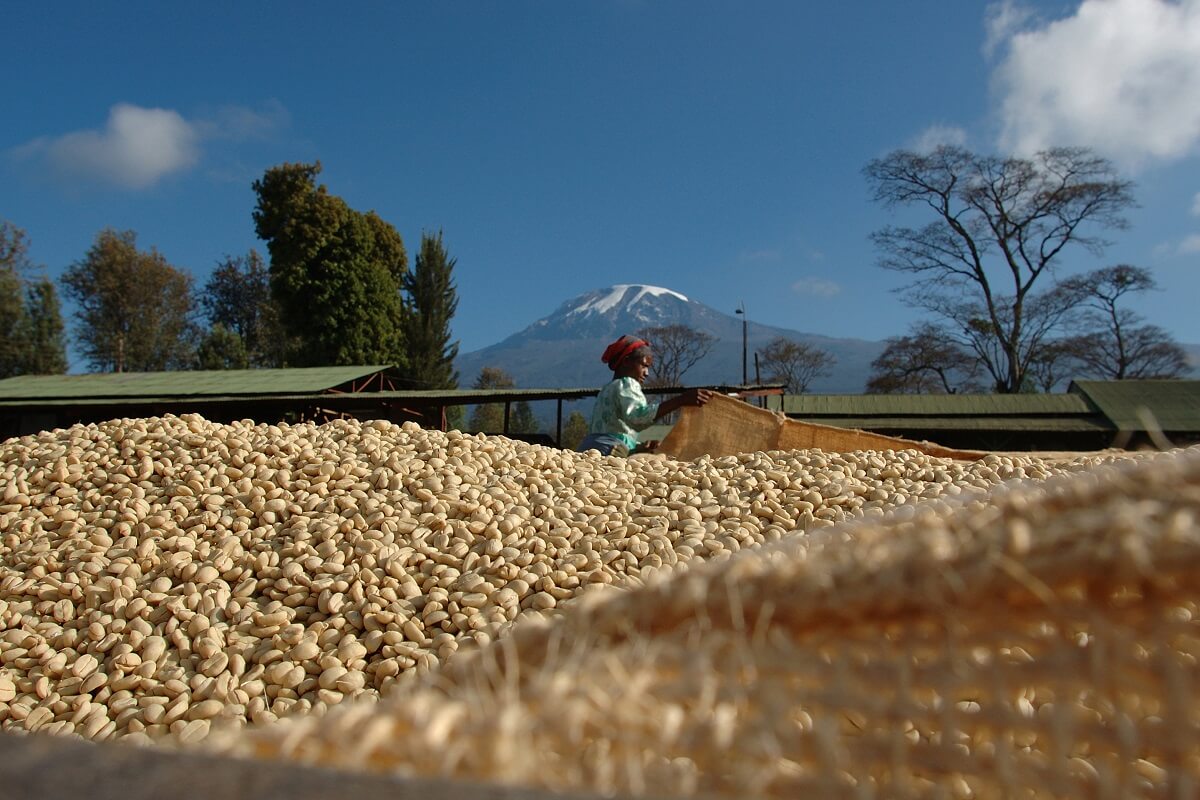
then it’s carried to the sorting racks to be hand-sorted for stones and defects and laid out to dry naturally in the African sun.
Finally the beans are bagged and weighed before being sent to the mill to have their husk removed and be graded, and bagged for export.
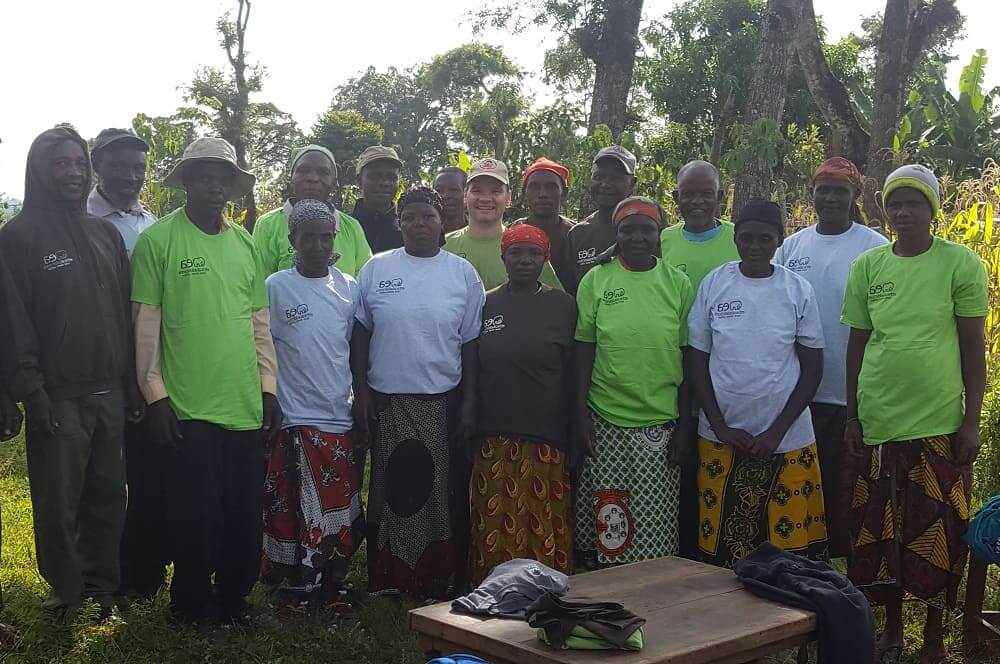
Some additional footage of the farmers on the Machare farm recorded five years earlier.
Many of you sent me out to Tanzania with comments and questions – the villagers loved that they could hear direct from those who enjoy their coffee and we had some fun in translation of the questions!
Here are a few of their responses (I’ve paraphrased):
What are your biggest joys and frustrations as a coffee farmer? – “Biggest joy is when we get paid! And biggest frustration is climate being so changeable and unreliable.”
What options do farmers have when they don’t like the alternatives that buyers offer them? – “Once the coffee is grown, no option. We have to sell to whoever comes along. But relationship with Ian has changed that. Other things we grow to help sustain us include maize and bananas.”
What help do they think we can offer?Do you drink coffee? – “Buying coffee at a good price and coming back every year.”
Do you drink coffee?– “Yes!” (I knew the answer to this before I asked and it is ‘no’, they don’t really like it, and it s a valuable crop, but they wanted to be polite so answered ‘yes’. When I questioned them they just all laughed.)
I was met by Athos in Sao Paulo then we travelled north into the mountains to Machado. I spent the next few days with the family, on the farm, in the rainforest, and watching Brazil record an historic 7-1 defeat – good job they still have fantastic coffee!
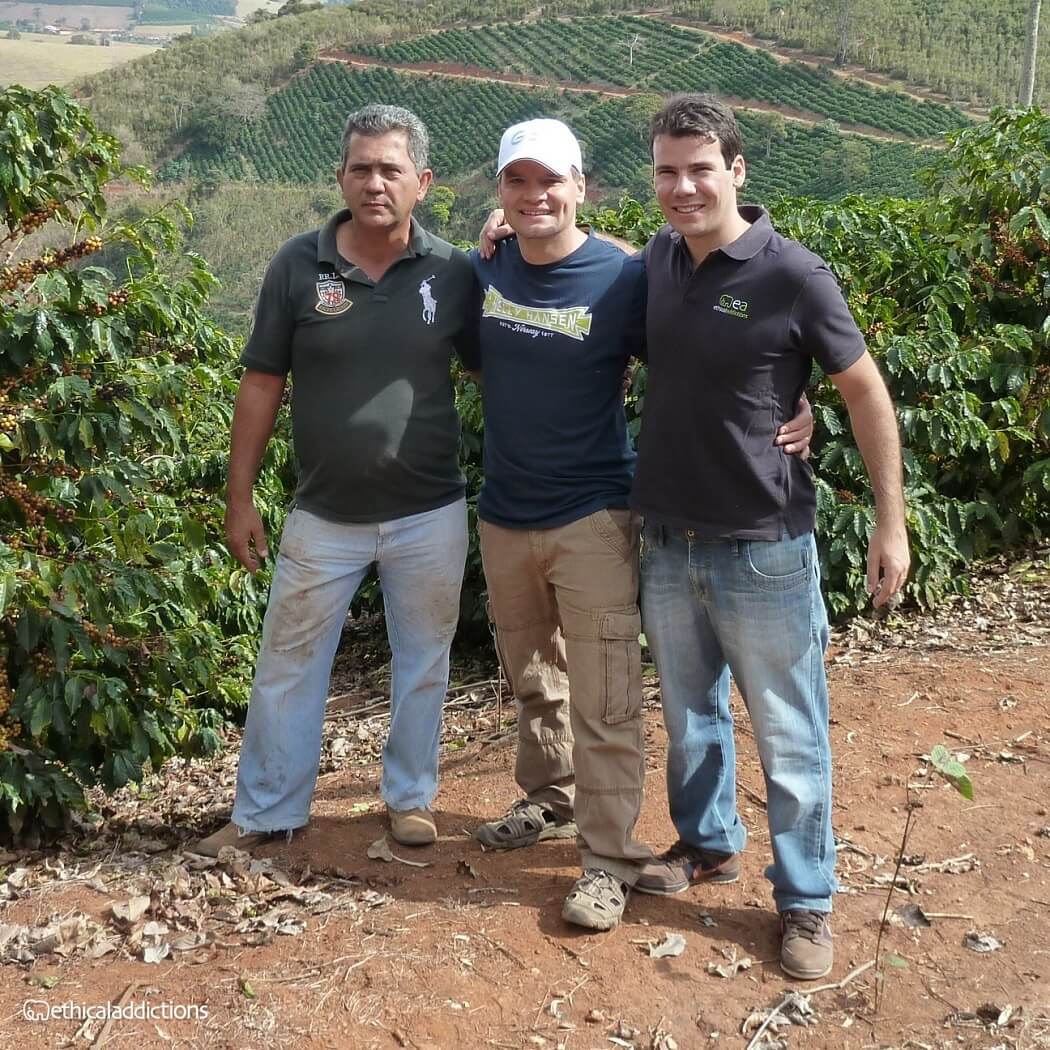
Head bean Ian (centre) with Isaltino and Athos from the Gerezim Farm in Brazil
Crop
We talked about the crop this year how generally, because of drought, the harvests in Brazil will be low, but despite this, at Gerezim and Vira Mao they are expecting a very high quality Brazilian roast coffee. Cupping the early harvest it has scored extremely high into the speciality scale.
Both Isaltino and Athos also wanted to stress the importance of altitude and good farming for quality, frustrated by the lack of knowledge of other farmers and the poor quality being produced in lower parts of the Minas Gerais region – something we already know and appreciate about their coffee, right? Not every Brazilian coffee is the same!
Crop
Costs are up across the board for transport and labour. Same as in the UK. So along with lower harvests and the market moving upwards we’re expecting a price increase.
Rainforests
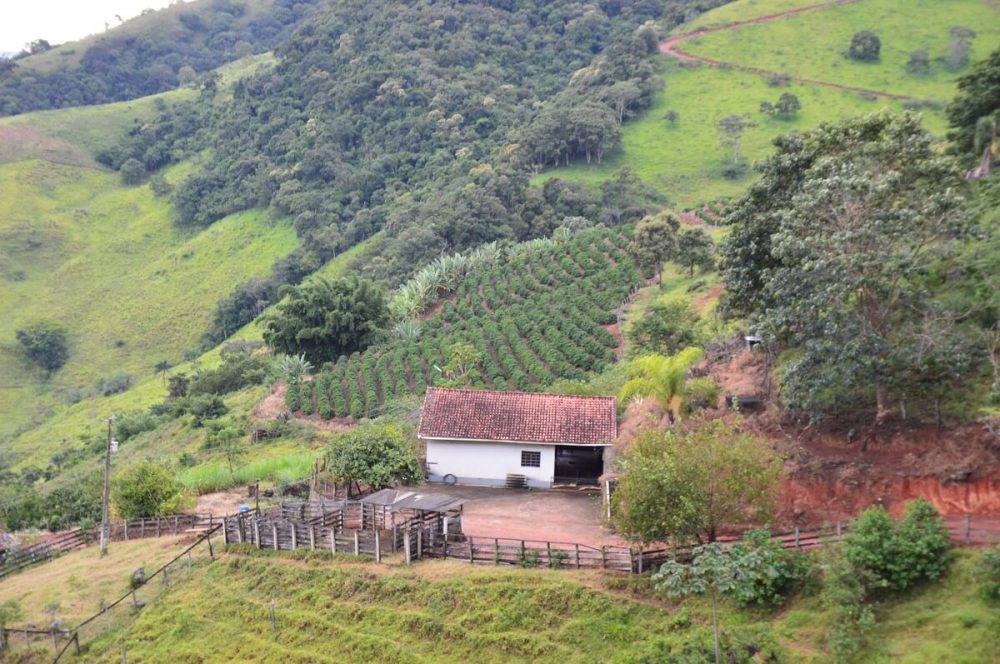
One of the things I was keen to see more of was the preservation of rainforests alongside the farm. About 20% of their farmland is left as wild rainforest to preserve it and the habitat it offers. The understanding of harmony between nature and farming was impressive.
Not enough space to write it all – ask more when you next order.
New Coffees
We’re exploring new origins and cupping new coffees in the next few weeks. Cameroon? Guatemala? Rwanda? Nicaragua?