Ethical Addictions Logo link to homepage

Colombia – Ian & Elliott’s Excellent Adventure

Bogata at 6am is a bustling metropolis. Street vendors sell food to the swathes of commuters whilst bike repair stands line a buzzing cycle lane full of professionals making their way to work. Crossing the road at times feels like taking your life in your hands but in truth it adds to the adventure. As a city, Bogota is a strange mix of modern high rises and colourful murals that tower above traditional houses and churches nestled at street level; and to its east the city ends abruptly meeting a wall of green mountains. The cable car up to Monserrate gives you a vantage over the sprawling city, a city full of trendy coffee shops and university campuses alive with students heading to lectures giving an air of a country ready to innovate and push forward into a better future.

GACHETA

The DNA of Ethical Addictions has always been to support small coffee producers who have great coffee but limited access to market – it’s why we trade directly; it’s why we fly halfway around the globe to sit in a restaurant with its own trout farm several hours outside of Bogota. We are meeting with Victor and Lucio, two of the smallholder farmers in the village of Gacheta.

Ian was here last year visiting for the first time but even on our return a year later it is like meeting with old friends. It’s not long before the conversation turns to coffee and some of the challenges that they are facing. There are issues around labour with many of the young people leaving for the cities, Lucio’s son tells us he is hoping to pursue a career in computer science which is just a snapshot of the issue. There are also issues around climate change, all of the coffee farmers across Colombia are praying for rains that should have already arrived. Without the rain the coffee cherries won’t ripen. There are also some issues with the current crop of trees for these smallholder communities. The first is rust – a disease that damages the leaves and fruit of the coffee trees. The good news is that there are some coffee varietals resistant to rust. The second major problem is the age of some of the trees on the farm. 

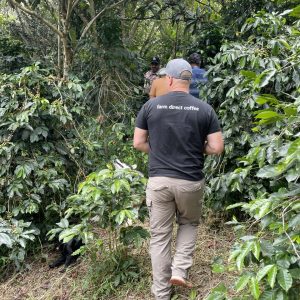
Walking around Lucio’s smallholding both of these problems are clear for us to see. There are telltale signs of rust on some of the trees, while others are struggling with the drought and others are showing their age with low yields of cherries on the branches. We see an occasional red cherry though most of them are green, longing for rainfall. 

While we can do little about the lack of rain, it is clear that one of the ways EA can invest in farmers like Lucio and Victor in Gacheta is to invest in new trees and encourage collaboration amongst the community. By buying some new seedlings in rust resistant varietals this will help rejuvenate the small holdings and in the long run lead to better quality and better yields of coffee. It also gives them a safe way for them to experiment with some more exotic varietals.
gacheta bag on location 06-min
gacheta walking lucio farm 02-min
MEDELLÍN

We have a few days before we are scheduled to travel to La Primavera to visit Francisco on his farm, so we get to take a short trip to Colombia’s second city, Medellín. 

Colombia is still a new origin for us and as we spend more time on the farms we are also keen to explore the country to help improve relationships and understand Colombian culture and history more (also we both really wanted to go).

Medellín is a city with a history (not all of it good), but now is revived to be a creative city, full of potential and opportunity. Its public transport system, links the affluent suburbs with instagram-friendly malls and onto the winding narrow alleyways of the near-vertical neighbourhoods of the comunas.

Nowhere tells this story better than San Javier (Comuna 13). This Community is testament to the resilience and innovation of its residents. Once considered the most dangerous place on earth, these streets are now bustling with tourists. There are brightly coloured murals on almost every surface and surreal sculptures emerge from parapets of houses and bars. Small shops and restaurants run up and down the maze of streets, there is even a small coffee roastery tucked away. The main street is serviced by outdoor escalators that encourage tourists up to the higher levels. Youth groups perform breakdancing routines for groups of tourists as a means of making money away from the gangs. Taking the cable car over the rest of the community away from the tourists gives you a sense of the scale of challenge still facing the city, it is clear there is still more that needs to be done. But it is a city that is no longer fearful but rather hopeful. 

LA PRIMAVERA

This La Primavera Finca (farm) is constantly looking for ways to improve their practice and respond to the various challenges of modern farming, international economics and climate change. 

At the centre of this is Francisco. To call Francisco just a farmer is to understate what he does. In truth he is a botanist, biologist, ecologist, engineer, economist and entrepreneur! As we walk around the farm Francisco explains how he is using each of the lots. Some he has stumped (cutting the older trees back to the stumps to allow new growth), in others he has started to plant newer varietals such as Tabi, and inothers he is running agronomy experiments.  

The soil at La Primavera is a challenge and drought is only making it more difficult. The farm was once used for cattle grazing which has caused problems with retaining nutrients. The dry ground is now cranking, making this retention even harder. Francisco is monitoring the soil for its nitrogen content as well as other various minerals that he is hoping various composting methods will help return some of the lost nutrients to the soil. He uses compost created at the farm (which he also uses for biogas); a series of fences made from sustainably harvested bamboo; as well as biochar which he hopes will help prevent the nutrients running off during heavy rains.

He has diversified as well. There is a bamboo guesthouse taking shape that will allow them to run experiences and retreats. And his brother us raising pigs. 

Having brought the milling to the farm he is also able to ensure the quality through that process too. As well as being able to offer milling to other farmers, including the coffee that we will get from Gacheta.

This innovation isn’t at the expense of the environment though. La Primavera is a sanctuary for all kinds of wildlife – in fact it is certified bird friendly! The coffee is shade grown amongst indigenous trees. Huge Areas of the rainforest are preserved and a host of hummingbirds drink nectar from the array of flowers that grow everywhere.

It is a very, very special place, and a priveledge to have got to spend time there.

FINAL THOUGHTS

Colombia is a nation of innovators, and Francisco is a great example of this. He is constantly striving to do better for coffee, people and the environment. He is bringing others with him. His connection and expertise make the relationship between EA and the Gacheta community work. Lending his knowledge to help improve practices not only on his own farm but also amongst other farmers too.

It is also alarming to see the impact climate change is having on these communities. Seeing first hand the impact of changing rainfall patterns and periods of drought that farmers are increasingly experiencing and the effect that has on coffee production as a result of their source of income is a stark reminder of what is at stake. 

But all of this reminds us of why we chose to trade directly and the way that relationship, even only a couple of years in, can have big impact, like being able to invest back into the farmers in Gacheta. 

We are leaving Colombia with a renewed excitement about the coffee itself, and the impact we can have. We will continue to build and invest in this partnership. And not just because it gives us a chance to visit and drink more coconut lemonade (though that is definitely a perk).

South America Special Edition 

As our new coffees land from Colombia . . . we fly out to Brazil . . .

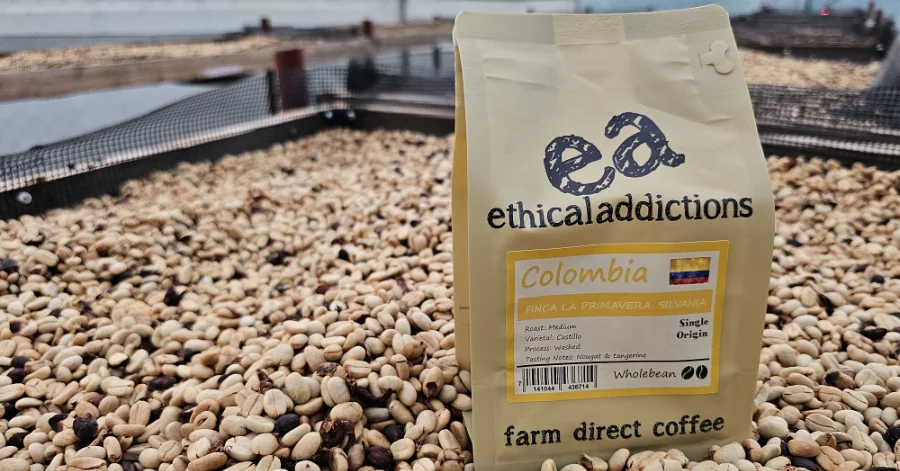
Introducing our two new direct trade Colombian coffees, that will become our long term partners in bringing you excellent speciality coffee, whilst making an impact with farmers and their communities.

It’s been a while getting this right but we are so happy with the coffee and the farmers we’re working with for the long-term now.  You can read more about our Colombian origin trip last year here.

Details:

Roast: Medium
Tasting Notes: Nougat & tangerine
Varietal: Castillo
Altitude: 1670m / 5500ft
Process: Washed
Score: 85.5

Finca La Primavera, Silvania, Cundinamarca

Details:

Roast: Medium
Tasting Notes: Honey, lemon & milk chocolate
Varietal: Typica
Altitude: 1800m / 5900ft
Process: Washed
Score: 87

Gacheta-Junin Community, Cundinamarca

We’re good under pressure

A well-maintained espresso machine is essential to making the perfect coffee.

At EA, for a long time now we have had our own espresso engineers and barista trainers to help with everything from looking after your machine through to getting your grind and extraction right, to texturing your milk for a super smooth flat white.

And now we are able to offer PSSR safety pressure testing in-house.

It is a requirement of HSE, under the PSSR Act 2000, that any equipment under pressure be safety tested annually, so we can now easily add this on to your annual service.

  • Delivery & Installation of new equipment

  • Pre-install advice

  • Call-outs and fixing problems

  • Annual service

  • Coffee equipment repairs

  • Water filter exchange

  • Spare parts

  • Grinder blades

  • PSSR safety valve testing (and replacement if nedeed)

  • Barista training

Call one of the EA team 01452 280026

*we promise to only use a hammer as a last resort

Call for information or to book a service 01452 280026

Try Mbata

This is a beautiful coffee . . . from a beautiful country

It’s a light-medium roast Ugandan Arabica coffee with hints of praline, honey and blueberry.

We’re always hunting for new origins and farms we can work with, and that can often lead us to wonderful coffees and new connections with good people, even if sometimes only in the short-term.  This is one such moment, through some coffee friends in Uganda we gladly bring to you this amazing speciality Arabica coffee from one of the most beautiful countries in the world. Although not specifically direct trade it is nonetheless a great traceable coffee supporting good people and projects. For now this is a guest coffee.


Mbata is high up in the foothills of the Rwenzoris, with the hub of the community sitting at 1700 metres above sea level, and many of the farmers live and grow their coffee well above this height, having farms of typically 1 & 2 acres.


Details:

Roast: Light/Medium

Tasting Notes: Praline, honey and blueberry.

Varietal: SL14 & SL28

Altitude: 1700 – 2000 m.a.s.l

Process: Natural


Use the code TRYMBATA for 10% off

PRICE CUTS on all take-away items

Winter Drinks

Fresh Summer Drinks

That summer sun is right around the corner and we’re sure you’re thinking about those potential summer drinks!

With the help of Sweetbird & Zuma, we have curated five drinks we think your customers will love, with easy to follow how to’s.

We’ve got five cold drink ideas for you to try.

1. Raspberry Iced Tea

HOW TO MAKE: ICED TEA

  1. Add three pumps of Raspberry syrup into a glass
  2. Fill to 3/4 with still or sparkling water.
  3. Stir and add ice cubes to fill
  4. Garnish and serve!

2. Mango & Passionfruit Smoothie

HOW TO MAKE: SMOOTHIE

  1. Fill a glass with ice, level with the top of the glass.
  2. Pour water over ice until 1/3 full.
  3. Pour smoothie over water and ice to the top.
  4. Pour contents of glass into blender jug.
  5. Put the lid on tightly, blend until smooth!

Key dates for this Summer

3. Peach Craft Soda

HOW TO MAKE: CRAFT SODA

  1. Add three pumps of Peach syrup into a glass.
  2. Fill to 3/4 with still or sparkling water.
  3. Stir and add ice cubes to fill
  4. Garnish and serve!

4. Vanilla Bean & Coconut Frappe

HOW TO MAKE: FRAPPE

  1. Fill a glass with ice, level with the top of the glass.
  2. Pour milk over ice to 1cm below the top.
  3. Pour contents of glass into a blender jug.
  4. Add 1 scoop of frappe powder.
  5. Add 2 pumps of Coconut syrup.
  6. Put the lid on tightly, blend until smooth!

5. Raspberry & Pomegranate Lemonade

HOW TO MAKE: LEMONADE

  1. Add four pumps of Raspberry and Pomegranate syrup into a glass.
  2. Fill to 3/4 with still or sparkling water.
  3. Stir and add ice cubes to fill.
  4. Garnish and serve!

In their most recent brochure, Sweetbird say that Cafe culture is continuing to flourish on the high street, with 80% of people who visit coffee shops doing so at least once a week!

All the more reason to be experimenting with new drinks, and keeping up with your customers needs + wants!

To see the full brochure click on the button below.

Brew Basics

Brewing Coffee for Beginners

Table of Contents

The art of brewing proper coffee is an enjoyable experience and how you brew does make a difference to the taste. In fact the same coffee brewed by different methods can seem almost unrecognisable to one another as they extract and emphasise different flavour notes. There are entire websites and youtube channels devoted to the subject but when you are starting out, knowing what advice to listen to can feel overwhelming. That’s why we decided to strip it all back to basics and create this journal post where we will go through the different ways to brew coffee and the type of flavours you can expect.

Coffee beans contain caffeine, natural oils and flavours within them. Depending on how much of those oils your brewing method lets through its filter will change the taste of your coffee.

Brewing Basics

Tip #1: This should go without saying, but step one, of any brewing process is to purchase high quality coffee. Low quality coffee will always taste bad, no matter how you brew it! 

Tip #2: Grind your own beans. This is not only part of the overall experience, but it ensures freshness and allows for the correct grind for your chosen brewing method. The size of grind dramatically affects the brew method and flavour profile each time.

Tip #3: Water temperature. Unlike making tea where using boiling water is ideal, coffee actually requires a slightly cooler temperature (about 92 degrees). When too hot the boiling water can burn the coffee grounds, destroying the oils and flavours in the beans. The simple solution is to wait a minute after boiling the kettle before using. 

Cafetiere (French Press)

The cafetière or French press is the most popular way of making coffee at home in the UK. It’s fairly simple to use and you can buy a basic cafetière for about £10. The coffee is brewed by immersing it in water for a few minutes. This method allows more of the strong flavour to come through giving you a fuller, stronger and rich bodied taste. 

The minor point for this method is that there will always be a small amount of coffee dregs in the bottom of your cup. However, if you use the Planetary Design Bru-Stop, the coffee dregs issue is greatly reduced.


Get a cafetière if … you want an affordable and simple way to make coffee with full flavour.

EA recommends: Grizzly Bear Blend

Stove Top (or Moka Pot)

The stove pot is one of the oldest methods of brewing coffee and is still used today for people who love ‘espresso’ coffee without the need of an espresso machine. They work by forcing boiling water upwards through the coffee and into a separate compartment.


Get a stove top if you … love the old school way of brewing and love your coffee rich, thick and creamy.

EA recommends: Espresso Duo

Pour-Over (V60 Dripper)

Named because you literally pour water over the ground coffee to extract the flavour. This is a great introduction to drinking better coffee and works well if you are making a single cup for yourself. If making for two or more, you can use a chemex (traditionally made of glass).

This process takes out more of the oils which means you get a smoother cup of coffee. Sometimes described as a sweeter cup of coffee with far less bitterness. 

The other great thing about this process is that it’s easy to clean up. The ground coffee stays in the filter and you can place it straight into your food waste.


Get a pour-over if you … love a smoother cup of coffee and a mess free, easy clean up.

EA recommends: Brazil Jacutinga

Aeropress

In some ways the Aeropress is like a pour over, but it is unique enough that we have given it its own separate category. This is a very popular brewing tool among the coffee nerds … and for good reason!

The Aeropress uses air pressure to push coffee through the filter producing a smooth and rich flavour. Like the V60, the coffee is not so strong due to lower levels of caffeine. 

There is also another way of brewing with the Aeropress called the inverted method, which works in a similar way to a cafetiere and allows more caffeine into your cup, giving you a stronger taste.


Get an aeropress if you … want a quick and convenient way of making coffee that is easy to take to work or on holiday.

EA recommends: Mountain Top Mweka Villages

Espresso Machines

For those lucky enough to have an espresso machine at home this gives you a range of options for different drinks, and a whole other extraction experience from the coffee beans. With the water at a high pressure forced through much finer ground coffee than most other brew methods you get strength, boldness and a rich crema full of aromatic flavour. 

This is then ideal for your base, giving you a punchy espresso base to enjoy on its own or with steamed milk depending on your drink of choice. You need a bold bean to cut through the milk and ensure you still get plenty of flavour in the cup.


Get an espresso machine if you … want the cafe experience at home!

EA recommends: World Select Espresso

How do the EA team brew at home?

❛❛

"My go-to at home is cafetiere, and we grind our own beans. Switching up what I take home from the roastery and keeping it hot in our insulated cafetiere so I can go back for that second (and third) cup."
Ian Meredith Profile Picture
Ian
Head Bean
"I love variation and experimentation. First coffee of the day is an espresso or a strong coffee from my moka pot. But the rest of the day is full of a variety of different coffees and brew methods. I tend to switch to Decaf around 3pm for full dawn to dusk coffee drinking."
Jack
Full of Beans
"Umm, Why would you brew at home when you have an espresso machine in the office and a Jack to make an americano in the morning!"
Elliott profile image
Elliott
Bean Stock
"When I lived with my parents, I used their at-home espresso machine - I was a Colombia girl through and through. Once I moved, I was given a pod coffee machine which I used for a while but stopped using it because of the amount of plastic waste it caused. Now I'm at EA, I enjoy starting the day with a Jack made coffee with a splash of honey!"
Flo profile image
Flo
Social Bean
"I’ve been using a cafetiere for years and before working at EA, didn’t even know there were so many ways of brewing coffee! I’ve recently been experimenting with the Aeropress and enjoying the smoother taste of the coffee. I like my coffee milky."
Delan Griffiths profile image
Del
Tech. Bean

❜❜

Conclusion

The best thing about brewing high quality coffee is that you can brew it however you want and nobody can tell you you’re wrong! There is definitely a level of enjoyment that comes from not only drinking great quality coffee but the ritual of brewing it the way you like it.

Part of the fun of starting out is experimenting with your brewing process to find the right system for you and then continuing to experiment with different techniques and coffees to discover new flavours.

When brewing high grade arabica beans, you can make it as simple or as complicated as you want. If you are on a tight budget or just starting out, using a regular kettle and our pre-ground coffee will be significantly better than instant or cheaper filter coffee. 

However, as you get into the groove of making coffee and want to take it to another level then any coffee aficionado will tell you, that the most important tool to invest in, is a grinder. 

In our next journal post, we will look at coffee grinders and why you should consider investing in one.

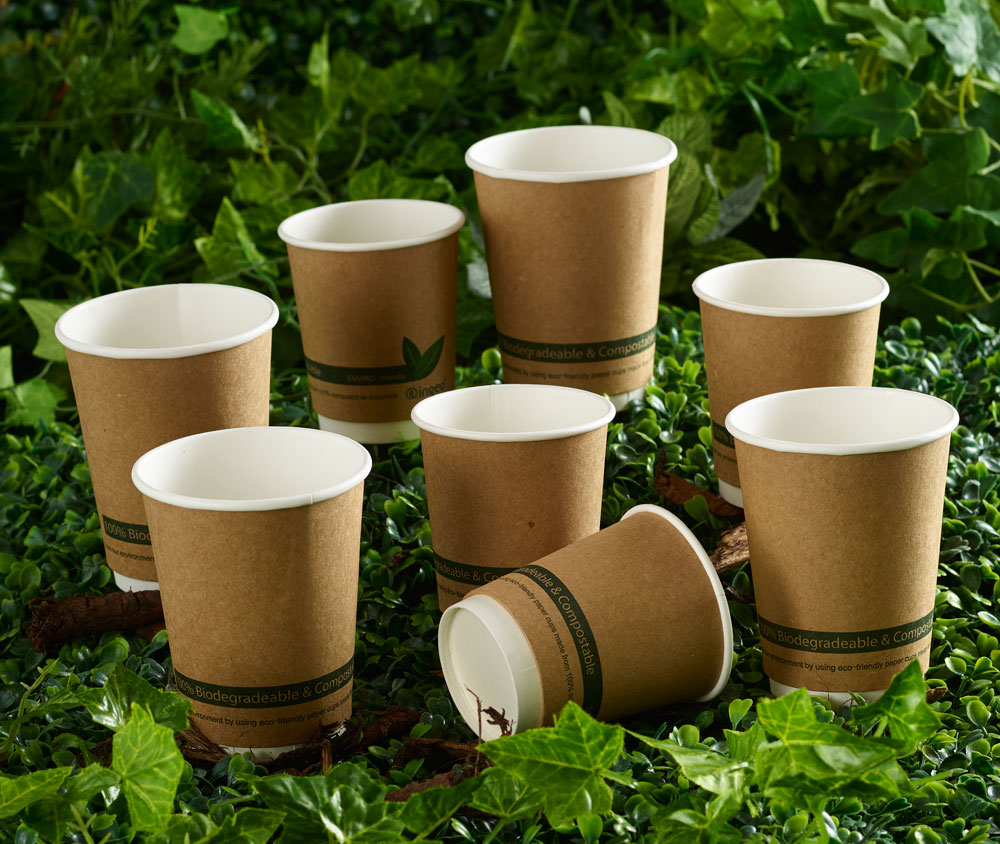
UPDATE ON CUPS, LIDS & TAKEAWAY ITEMS

Due to ongoing increases in material and operational costs that have been passed on to us, we are again left with no alternative but to make price rises on certain products.

We are really frustrated by this, but equally sympathetic given our own firsthand knowledge of the shipping and logistics issues globally at the moment we have to navigate with coffee.

So, regrettably there are more price rises this month on takeaway items.  Please note we are holding our margin and simply passing on increases from suppliers. We have searched the market for other suppliers and negotiated prices so again be assured we’re doing all we can for you.

We also want to assure you that both us and our cup suppliers have every intention to reduce prices again as soon as possible.  
In the meantime it does represent a great opportunity to encourage customers to use reusable cups and/or follow the many coffee shops that are now charging a premium on menu price for a disposable cup.

Take-out items: Price Update

As you are probably aware from the news there are huge challenges with items coming in from overseas at the moment.  From all suppliers we are being met with a lack of product availability and significant price increases.  This is due to a perfect storm of post-Covid demand, Brexit border issues, complicated supply chains increasing shipping container costs, the Suez Canal blockage that still has a backlog, and an increase in raw materials.  All of this has meant a shortage of products and price increases.

We are sourcing what options we can for cups, lids and other items to keep our customers trading, however in the short-term this does mean replacement products where we may have to compromise on compostable/recyclable options purely because of availability, and then due to short supply and huge demand there are fluctuating prices.

We will endeavour to source the best options at the best price, however in the short-term this means we all need to be flexible and unfortunately be prepared to pay a little more.

Our hope and expectation is that prices will return back down within a few months at most and a reliable supply of good compostable products will be secured.
In the meantime please be patient with us and raise any questions with us you may have.

Ethical Addictions Coffee Roasters
Privacy Overview

This website uses cookies so that we can provide you with the best user experience possible. Cookie information is stored in your browser and performs functions such as recognising you when you return to our website and helping our team to understand which sections of the website you find most interesting and useful.