Ethical Addictions Logo link to homepage

Brazil House build project

Brazil Project: Renovating La Casa de Idê

A key part of our ethos as a business is investing back into the communities that produce our coffee beans, sometimes this looks like helping with equipment that helps them in their coffee production, other times it involves partnering with them by helping people in their communities who are most in need.

One of our latest projects has been working with Athos, Luiz and their friends in the community we have helped play a small part in renovating a home for a family that was really suffering with poor health and financial difficulties.

Amanda says:

“This is Mrs Ide and her daughter Adriana who has additional needs. She has suffered a great deal in her life. Having lost her husband 3 years ago and having had a heart attack herself. If it had not been for the assistance from my mother she would not have been able to survive. She has become like family to us and we are helping to give her the decent home that she deserves.  

We have completely rebuilt her home from scratch as her existing house did not have any foundations. A group we formed from the city hall as well as friends were contributing everything to the project. My family started this project to help her as her house was sinking and there was a danger that she and her house may completely sink underground. But now that group that was helping has stopped.

Thank God we have very good people in this group helping! It’s a miracle from God! I just have to thank everyone who decided to help us with this action! This is a miracle for us, there are still very good people in this world! I only have gratitude!”

Colombia – Ian & Elliott’s Excellent Adventure

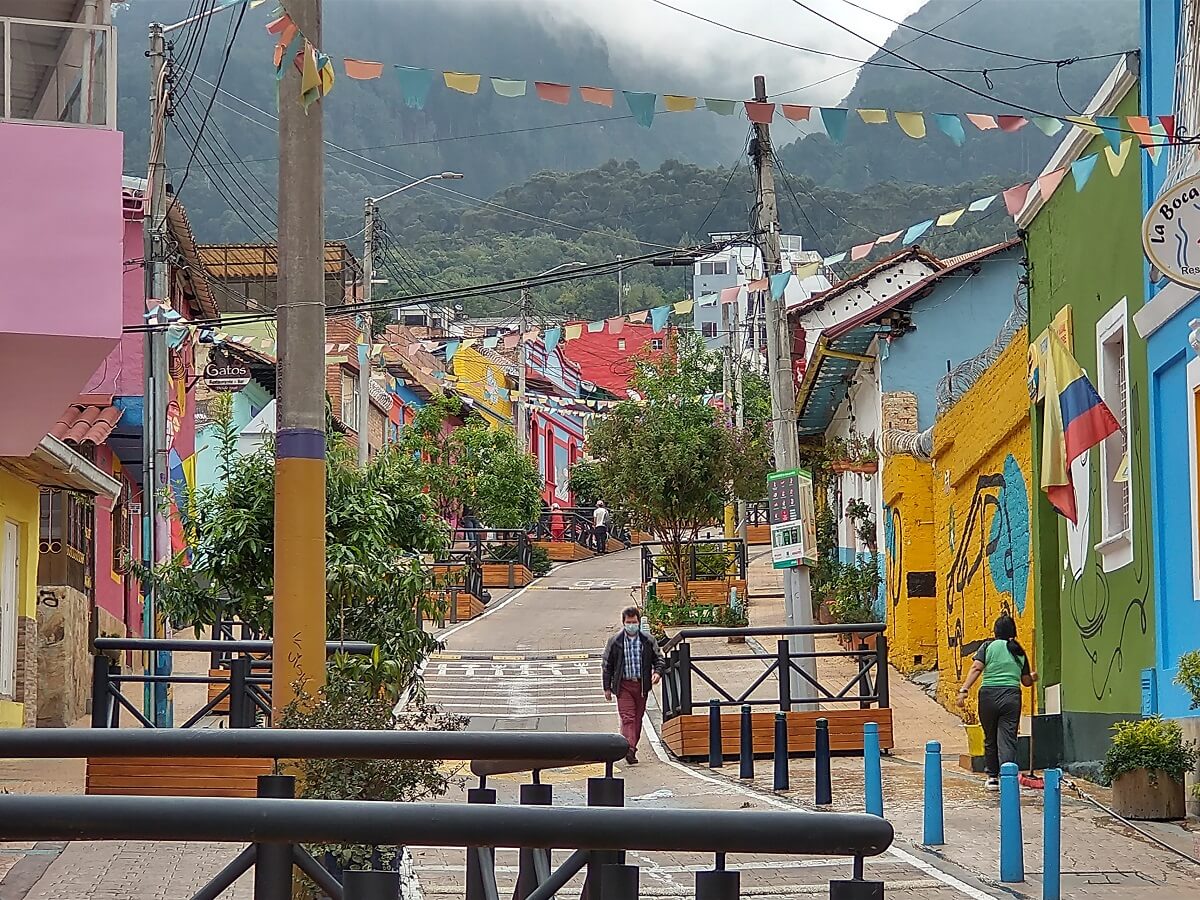
Bogata at 6am is a bustling metropolis. Street vendors sell food to the swathes of commuters whilst bike repair stands line a buzzing cycle lane full of professionals making their way to work. Crossing the road at times feels like taking your life in your hands but in truth it adds to the adventure. As a city, Bogota is a strange mix of modern high rises and colourful murals that tower above traditional houses and churches nestled at street level; and to its east the city ends abruptly meeting a wall of green mountains. The cable car up to Monserrate gives you a vantage over the sprawling city, a city full of trendy coffee shops and university campuses alive with students heading to lectures giving an air of a country ready to innovate and push forward into a better future.

GACHETA

The DNA of Ethical Addictions has always been to support small coffee producers who have great coffee but limited access to market – it’s why we trade directly; it’s why we fly halfway around the globe to sit in a restaurant with its own trout farm several hours outside of Bogota. We are meeting with Victor and Lucio, two of the smallholder farmers in the village of Gacheta.

Ian was here last year visiting for the first time but even on our return a year later it is like meeting with old friends. It’s not long before the conversation turns to coffee and some of the challenges that they are facing. There are issues around labour with many of the young people leaving for the cities, Lucio’s son tells us he is hoping to pursue a career in computer science which is just a snapshot of the issue. There are also issues around climate change, all of the coffee farmers across Colombia are praying for rains that should have already arrived. Without the rain the coffee cherries won’t ripen. There are also some issues with the current crop of trees for these smallholder communities. The first is rust – a disease that damages the leaves and fruit of the coffee trees. The good news is that there are some coffee varietals resistant to rust. The second major problem is the age of some of the trees on the farm. 

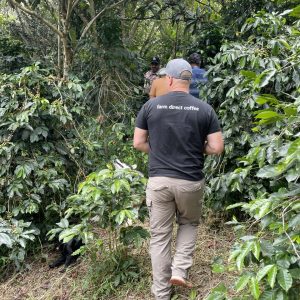
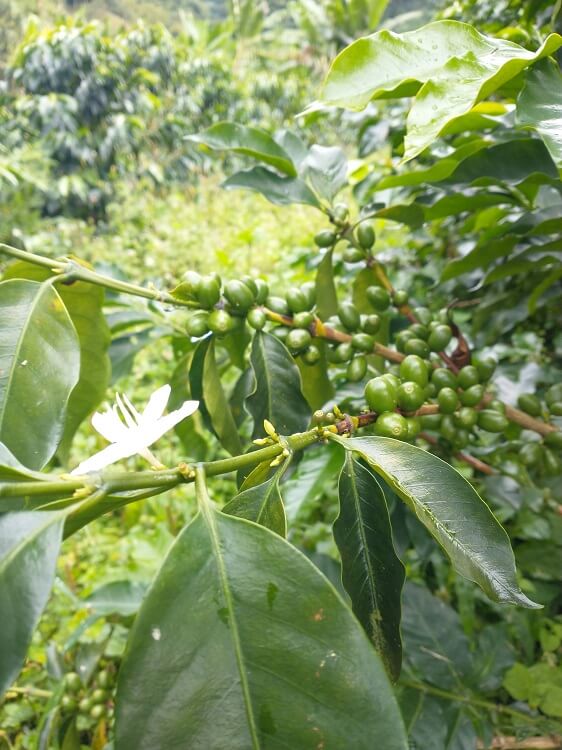
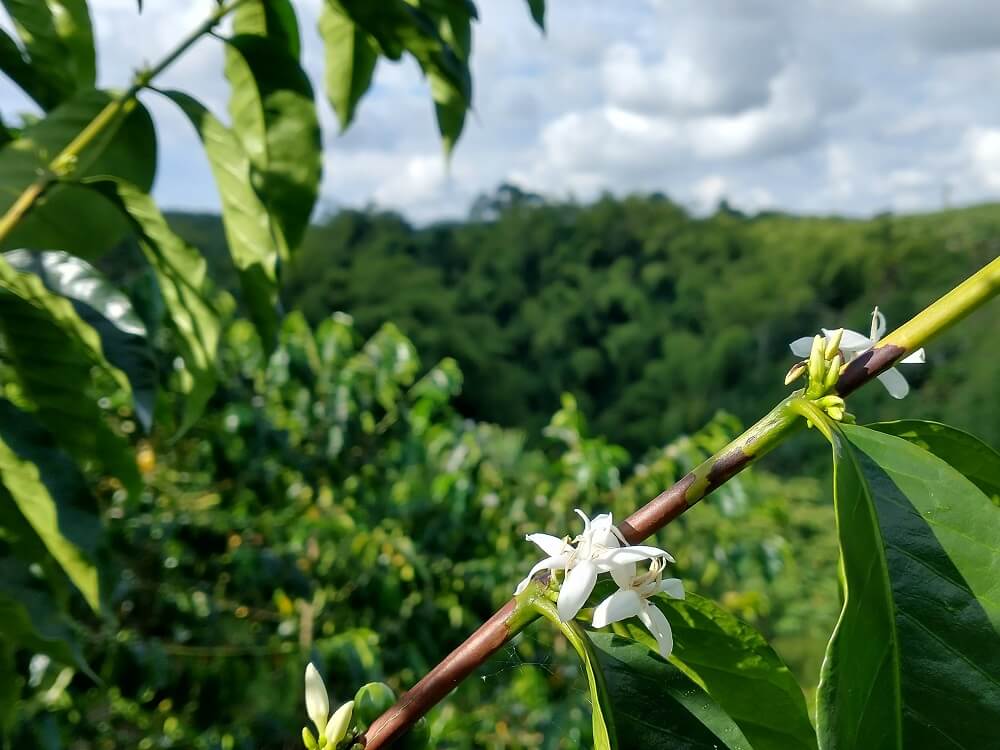
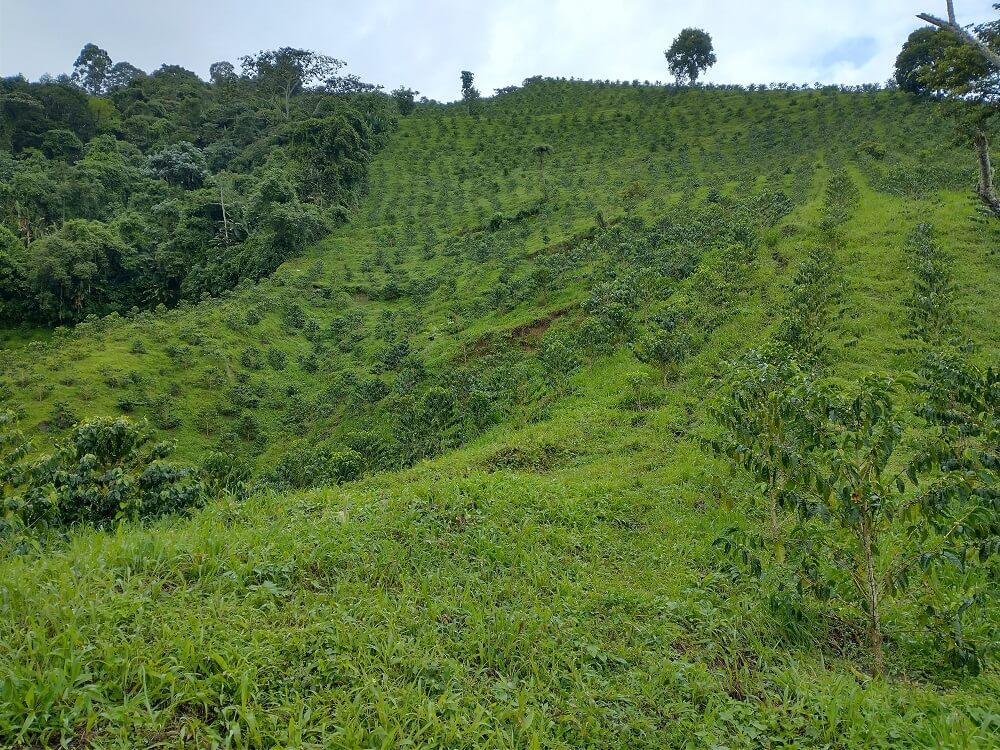
Walking around Lucio’s smallholding both of these problems are clear for us to see. There are telltale signs of rust on some of the trees, while others are struggling with the drought and others are showing their age with low yields of cherries on the branches. We see an occasional red cherry though most of them are green, longing for rainfall. 

While we can do little about the lack of rain, it is clear that one of the ways EA can invest in farmers like Lucio and Victor in Gacheta is to invest in new trees and encourage collaboration amongst the community. By buying some new seedlings in rust resistant varietals this will help rejuvenate the small holdings and in the long run lead to better quality and better yields of coffee. It also gives them a safe way for them to experiment with some more exotic varietals.

gacheta bag on location 06-min
gacheta walking lucio farm 02-min
MEDELLÍN

We have a few days before we are scheduled to travel to La Primavera to visit Francisco on his farm, so we get to take a short trip to Colombia’s second city, Medellín. 

Colombia is still a new origin for us and as we spend more time on the farms we are also keen to explore the country to help improve relationships and understand Colombian culture and history more (also we both really wanted to go).

Medellín is a city with a history (not all of it good), but now is revived to be a creative city, full of potential and opportunity. Its public transport system, links the affluent suburbs with instagram-friendly malls and onto the winding narrow alleyways of the near-vertical neighbourhoods of the comunas.

Nowhere tells this story better than San Javier (Comuna 13). This Community is testament to the resilience and innovation of its residents. Once considered the most dangerous place on earth, these streets are now bustling with tourists. There are brightly coloured murals on almost every surface and surreal sculptures emerge from parapets of houses and bars. Small shops and restaurants run up and down the maze of streets, there is even a small coffee roastery tucked away. The main street is serviced by outdoor escalators that encourage tourists up to the higher levels. Youth groups perform breakdancing routines for groups of tourists as a means of making money away from the gangs. Taking the cable car over the rest of the community away from the tourists gives you a sense of the scale of challenge still facing the city, it is clear there is still more that needs to be done. But it is a city that is no longer fearful but rather hopeful. 

LA PRIMAVERA

This La Primavera Finca (farm) is constantly looking for ways to improve their practice and respond to the various challenges of modern farming, international economics and climate change. 

At the centre of this is Francisco. To call Francisco just a farmer is to understate what he does. In truth he is a botanist, biologist, ecologist, engineer, economist and entrepreneur! As we walk around the farm Francisco explains how he is using each of the lots. Some he has stumped (cutting the older trees back to the stumps to allow new growth), in others he has started to plant newer varietals such as Tabi, and inothers he is running agronomy experiments.  

The soil at La Primavera is a challenge and drought is only making it more difficult. The farm was once used for cattle grazing which has caused problems with retaining nutrients. The dry ground is now cranking, making this retention even harder. Francisco is monitoring the soil for its nitrogen content as well as other various minerals that he is hoping various composting methods will help return some of the lost nutrients to the soil. He uses compost created at the farm (which he also uses for biogas); a series of fences made from sustainably harvested bamboo; as well as biochar which he hopes will help prevent the nutrients running off during heavy rains.

He has diversified as well. There is a bamboo guesthouse taking shape that will allow them to run experiences and retreats. And his brother us raising pigs. 

Having brought the milling to the farm he is also able to ensure the quality through that process too. As well as being able to offer milling to other farmers, including the coffee that we will get from Gacheta.

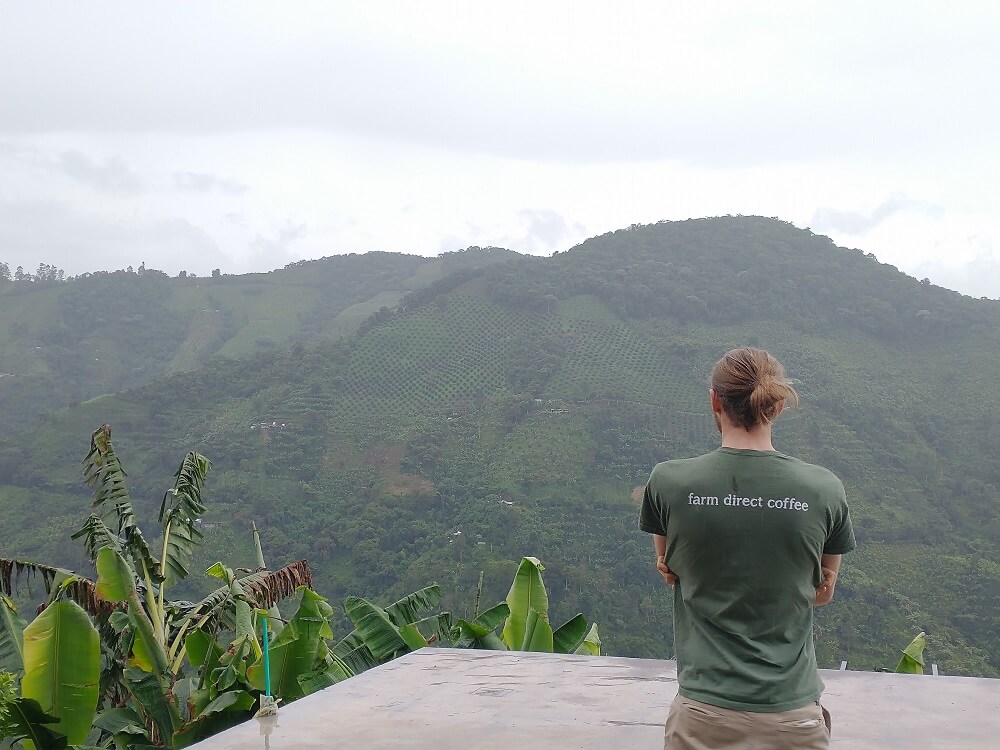
This innovation isn’t at the expense of the environment though. La Primavera is a sanctuary for all kinds of wildlife – in fact it is certified bird friendly! The coffee is shade grown amongst indigenous trees. Huge Areas of the rainforest are preserved and a host of hummingbirds drink nectar from the array of flowers that grow everywhere.

It is a very, very special place, and a priveledge to have got to spend time there.

FINAL THOUGHTS

Colombia is a nation of innovators, and Francisco is a great example of this. He is constantly striving to do better for coffee, people and the environment. He is bringing others with him. His connection and expertise make the relationship between EA and the Gacheta community work. Lending his knowledge to help improve practices not only on his own farm but also amongst other farmers too.

It is also alarming to see the impact climate change is having on these communities. Seeing first hand the impact of changing rainfall patterns and periods of drought that farmers are increasingly experiencing and the effect that has on coffee production as a result of their source of income is a stark reminder of what is at stake. 

But all of this reminds us of why we chose to trade directly and the way that relationship, even only a couple of years in, can have big impact, like being able to invest back into the farmers in Gacheta. 

We are leaving Colombia with a renewed excitement about the coffee itself, and the impact we can have. We will continue to build and invest in this partnership. And not just because it gives us a chance to visit and drink more coconut lemonade (though that is definitely a perk).

A Brazilliant Time

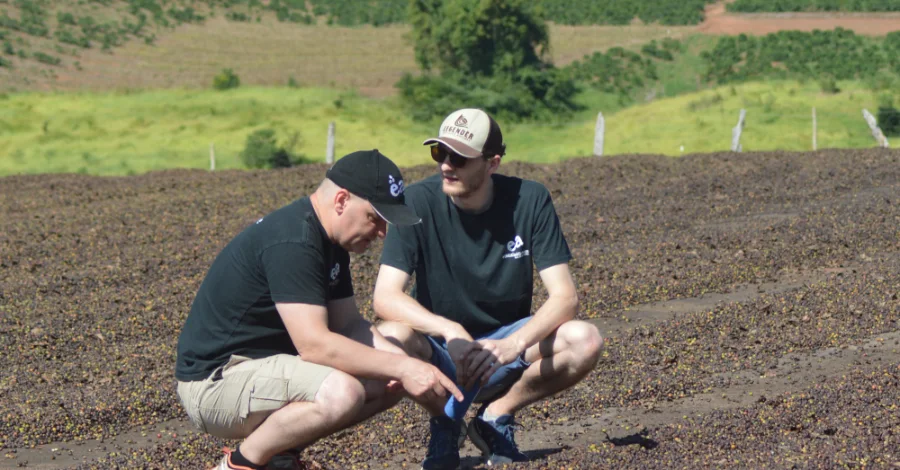
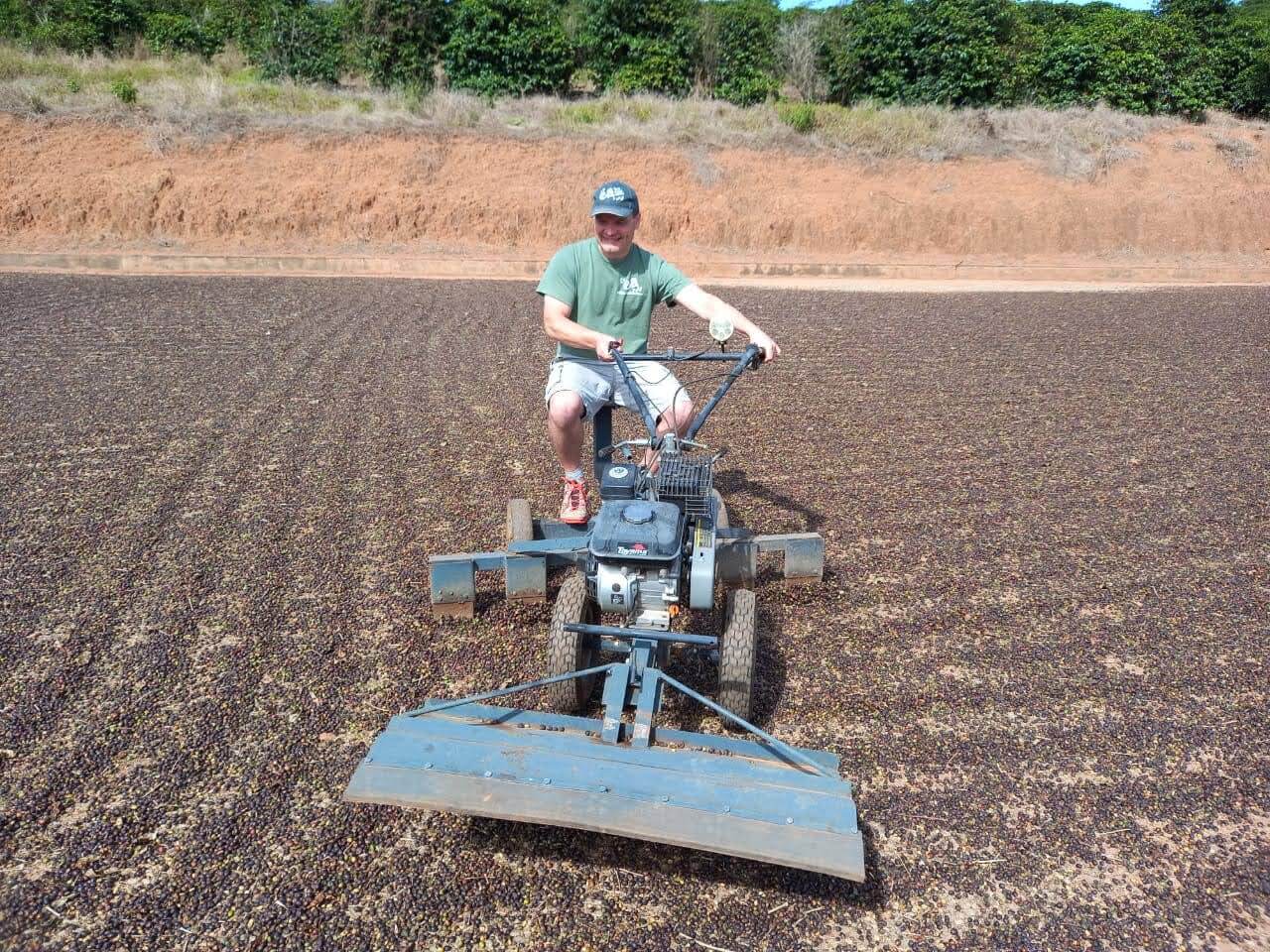
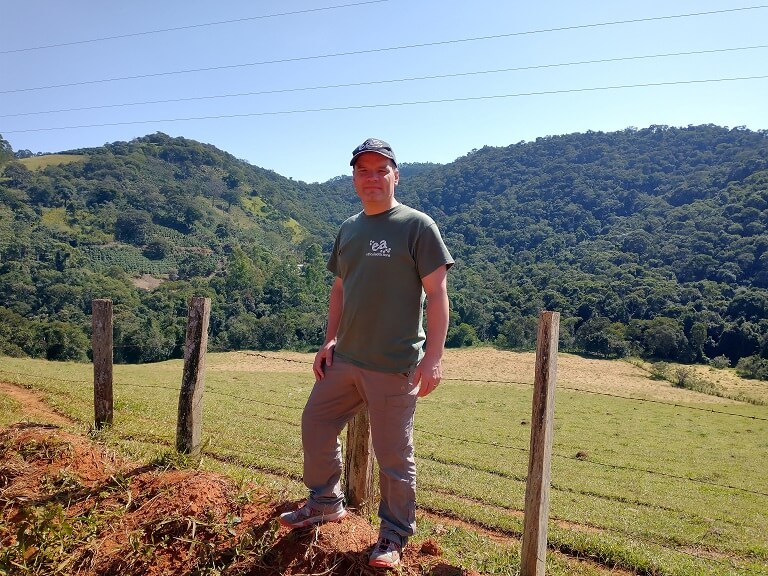
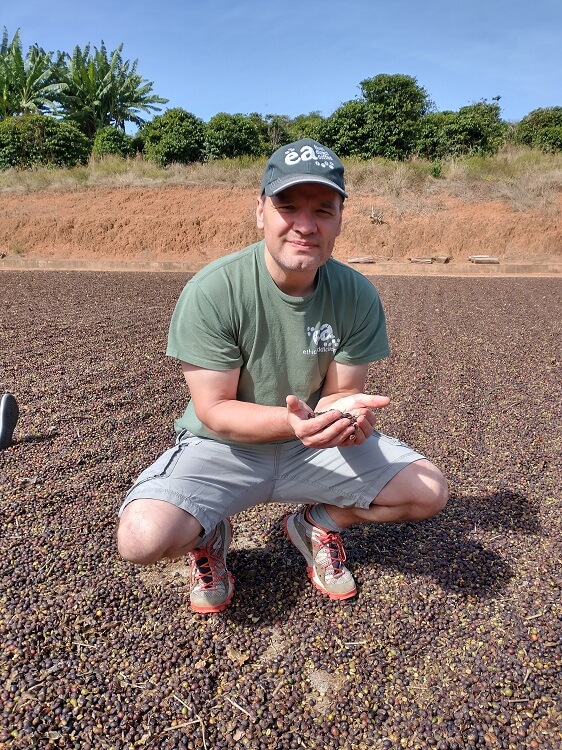
Ian & Jack in a ploughed coffee field Brazil

Brazil; the land of football, samba and coffee!  After the 11-hour flight to Sao Paulo, the 4-hour drive to the small coffee hotspot of Machado in Sud de Minas we were greeted by our good friend Demilson.  Within an hour we are laughing, eating birthday cake and drinking beer in his kitchen, sharing highs and lows of coffee, business and life. 

One unavoidable issue is clear on a visit to a larger fazenda (farm) after lunch – the effects of climate change causing inconsistent harvests. Ideally you would get a coffee tree full of cherries ripening at the same time so they can be picked all at once.  We are seeing more and more that you will get a huge range of ripeness with some green, some beautiful reds and some with a covering of mould!  On large fazendas with more machinery and less selective picking it results in a more inconsistent crop that you can taste in the cup.  Fuelled with a punchy espresso we press on and visit the cooperative mill.  The government has subsidised the coffee industry allowing newer and more sophisticated technology to help with processing the coffee.  It is good to see the whole process with its moving parts – there is a lot of care and attention that goes into our espressos and drip coffees. 
 
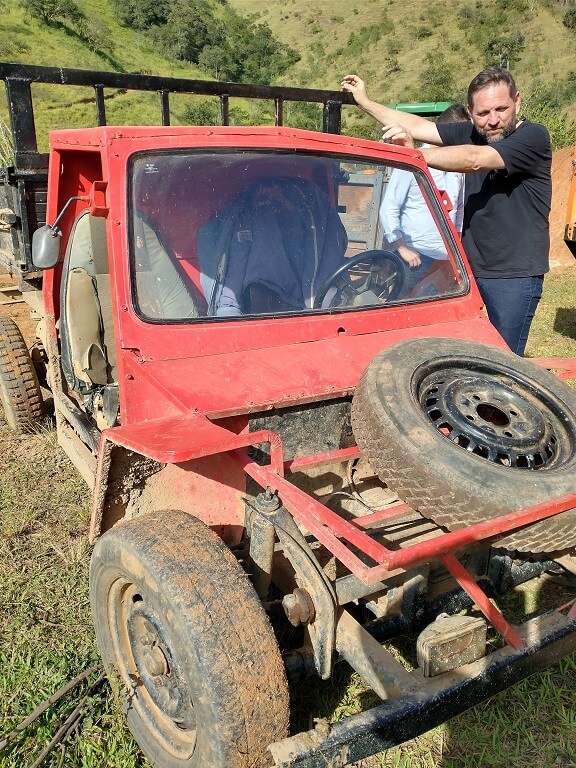
The next day is all about the Sitio’s – more small scale coffee farms.  We meet Angelo who shows us around his Sitio Paradiso.  Angelo is eager to show us his new coffee fermentation which he is hoping to get a good volume of and sell at a higher price than his normal Arabica coffee.  After coffee, cheese and pao de queijo (cheesy bread) at the farmhouse we are off to visit our friends from the Jacutinga Community.  Nelson takes us up in his Gaiola to proudly show us the best view of the surrounding area – and it is pretty spectacular.  Nelson is able to share some of the issues that the community is facing and we later reflect with Demilson that these are the communities we can really help by allowing them a route to market they would otherwise be without. 
 
The few days we have with Demilson are a real joy.  The relationship with him and his family has developed from a work relationship to one of true friendship.  We laugh lots, eat good food and talk about the future plans we all have.  Coffee is a great industry to work in, full of great people who are fun to work with; Demilison is one of those guys. 
The second half of the week we are based nearby at the Caixeta family farm – Vira Mao.  Athos meets us for breakfast and greets us like an old friend – Athos has been our ever consistent contact in Brazil and it is beautiful to see how the relationship has developed over the intervening years.  Athos takes us to the large Serra Negra farm which was where his Grandmother was born and raised.  The farmhouse needs some serious renovating but has a beautiful lake and there are ambitious plans to create a boutique base for coffee tours and trips in the future. We head to Vira Mao and it is a national holiday (still no idea what for…) so the whole Caixeta family are at the farmhouse where we join them for lunch. Less like a sit down meal together and more like an afternoon with various bbq boards, games of volleyball and lots of sharing of stories. 
 
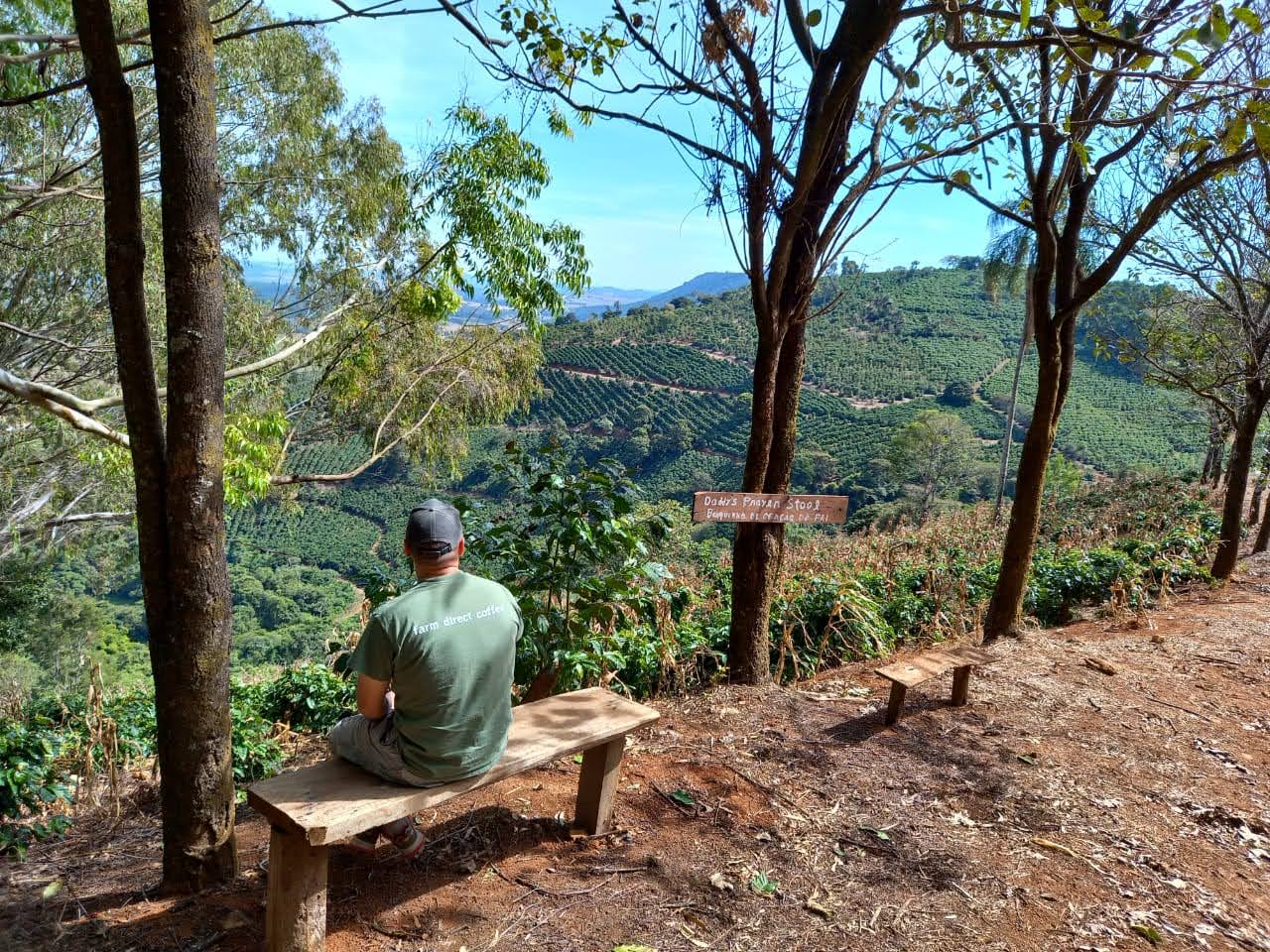
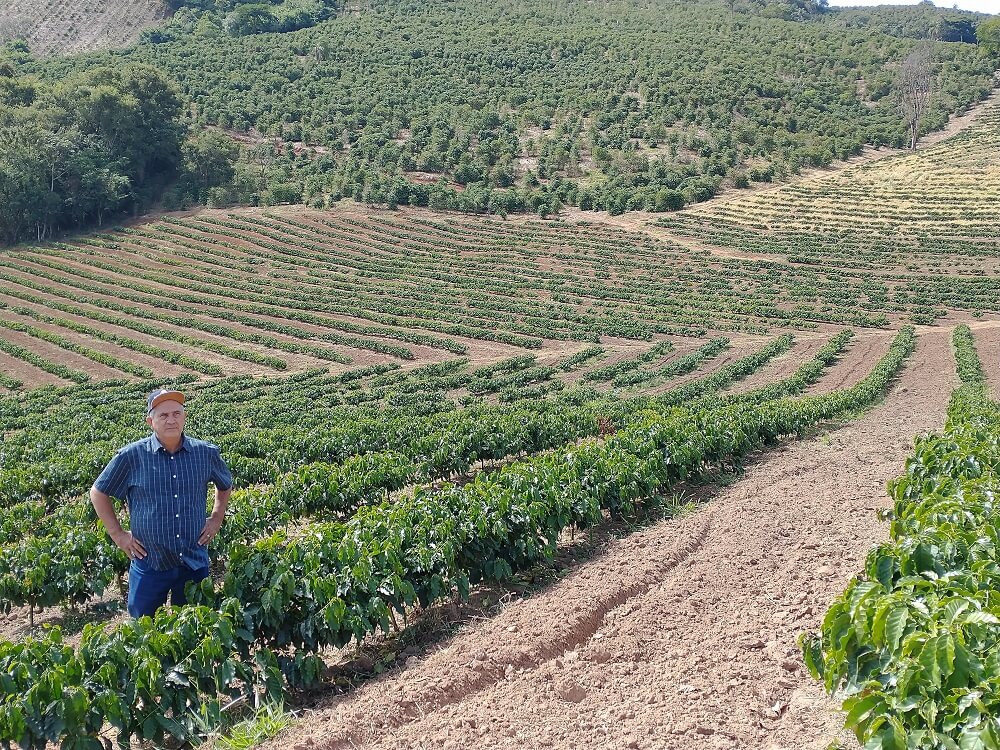
We go for an early evening walk through the coffee trees with Athos and Isaltino.  They share some of the realities of managing the farm and navigating the volatility of the coffee market. We reach the prayer bench overlooking the farm and have the privilege of praying over the farm and Caixeta family.  It’s an opportunity to be grateful for all the work together over the last 15 years, for this next crop and future provision for their families.  It is very moving to have a close friendship like this and I know this was a real highlight for Athos and Isaltino. 
A large part of the trip was to shore up our supply of Brazilian coffee for the next few years.  Having a wider pool of farmers that we know and trust gives us more security and transparency if one farm has a particularly low yield and also means we can grow as a business with increased direct trade established.  The Manaaim Community is a collection of farmers who live close by to the Vira Mao farm.  We spent some time with father and son, Valdo and David, at their farm Montana de Boa Esparanza, ‘the mountain of good hope.’  They are extremely hospitable and eager to show us the farm and their coffee.  We meet Helinho and his son Lucas at Nascentes da Serra, ‘Spring Mountain.’  They are good friends of the Caixeta family and seem like great guys.  The farm is well maintained and they are particularly excited to show us a new varietal – Arara.  It is yellow in colour, sweet tasting and is of a high quality with a high yield – a great combo! We had the opportunity to meet around 20 of the Manaaim producers the next morning at their church gathering.  It was a chance for us to communicate who we are and how we would like to partner with producers in a transparent and direct way.  We are looking forward to the coffee being harvested in the next month or so and getting some samples – watch this space. 
 
The trip culminated with several goodbyes – we take the Caixeta family out for pizza and it’s a great way to end a memorable trip.  We laugh about small moments from our time together, from Ians dodgy footie skills, my dinner table mishap and our general incompetence at Portuguese.  For me it was my first time visiting the country and my overall reflection from the trip is the importance and weight we put on the relationships we have built as a company over the last 15 years.  We have experienced real highs together with both Athos and Demilson, with some issues as well. Through honest conversations and learning from experience we are seeing the fruit of working with these great people and the wonderful coffee they produce. 
Coffee Market Updates and Trends
The main conversation we had with farmers, producers and general coffee people is the huge increase in labour costs.  The main reason being a labour shortage caused most likely by urban migration amongst younger people.  A coffee picker can now earn up to 10 times the amount of minimum wage!  From working with other coffee producing countries it is hard to see how Brazilian coffee can be competitive with such high labour costs compared to other countries.  Coffee prices are heading back up.  Vietnam, the second largest producer of coffee, is seeing a 20% drop in this years harvest.  Although 95% of coffee in Vietnam is robusta this is pushing up the price of Robusta and in turn Arabica coffee.  Environmental factors are also affecting the harvest this year.  Continued effects of climate change are causing changes to weather patterns and harvest times.  This year crop has also been plagued by leaf rust and pests attacking the harvest.  We are committed to buying the higher grade coffee that our farmers produce.  This year we are expecting that this higher quality coffee (screen 16-18) will only account for around 5% of the harvest compared to around 30% from an average year. B

More challenges and trails in the years ahead with the constant reminder that we have a responsibility to look after our planet and reverse the effects of climate change.  However we are encouraged that from an environmental, ethical and relational standpoint our model of direct trade will help steer us through whilst supporting some wonderful people and the communities they serve. 

South America Special Edition 

As our new coffees land from Colombia . . . we fly out to Brazil . . .

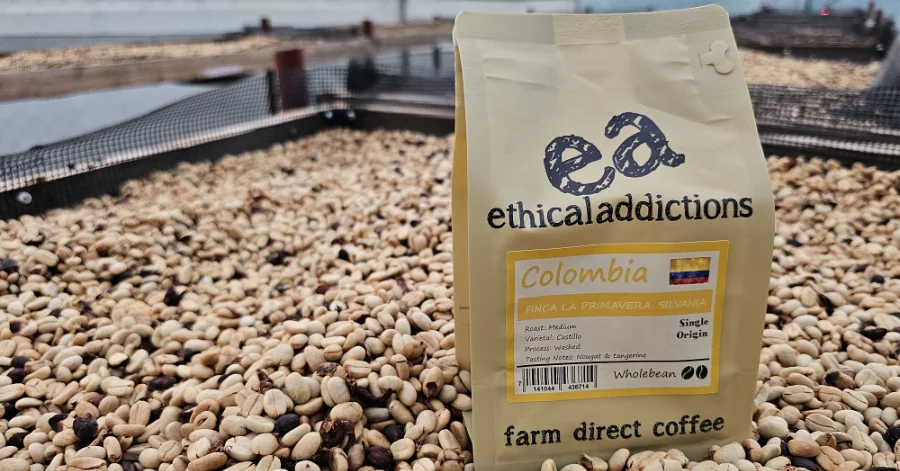
Introducing our two new direct trade Colombian coffees, that will become our long term partners in bringing you excellent speciality coffee, whilst making an impact with farmers and their communities.

It’s been a while getting this right but we are so happy with the coffee and the farmers we’re working with for the long-term now.  You can read more about our Colombian origin trip last year here.

Details:

Roast: Medium
Tasting Notes: Nougat & tangerine
Varietal: Castillo
Altitude: 1670m / 5500ft
Process: Washed
Score: 85.5

Finca La Primavera, Silvania, Cundinamarca

Details:

Roast: Medium
Tasting Notes: Honey, lemon & milk chocolate
Varietal: Typica
Altitude: 1800m / 5900ft
Process: Washed
Score: 87

Gacheta-Junin Community, Cundinamarca

Origin Report: Colombia

La Primavera Finca

We’re coffee hunting again, trying to find the right coffee farm that we hope to be our long-term partner in Colombia.  The next few days are enlightening, exciting and pure joy.  We’re staying with Francisco, who along with his sister and brother have inherited the family farm and are rehabilitating it as an eco farm, one of the most environmentally conscious farms I’ve ever visited; and in total harmony with nature.  When they talk about it they have so much passion and emotion in their desire to “heal the soil” and “celebrate the return of wildlife”.  It was inspiring. 

We work shade grown farms in different countries, and this is really important to us – maintaining the indigenous trees, the natural habitat and the vital ecosystems rather than stripping forest for easily managed farmland.  But this was the next level of shade grown – a more accurate description would be that it was some coffee trees planted in a rainforest! 

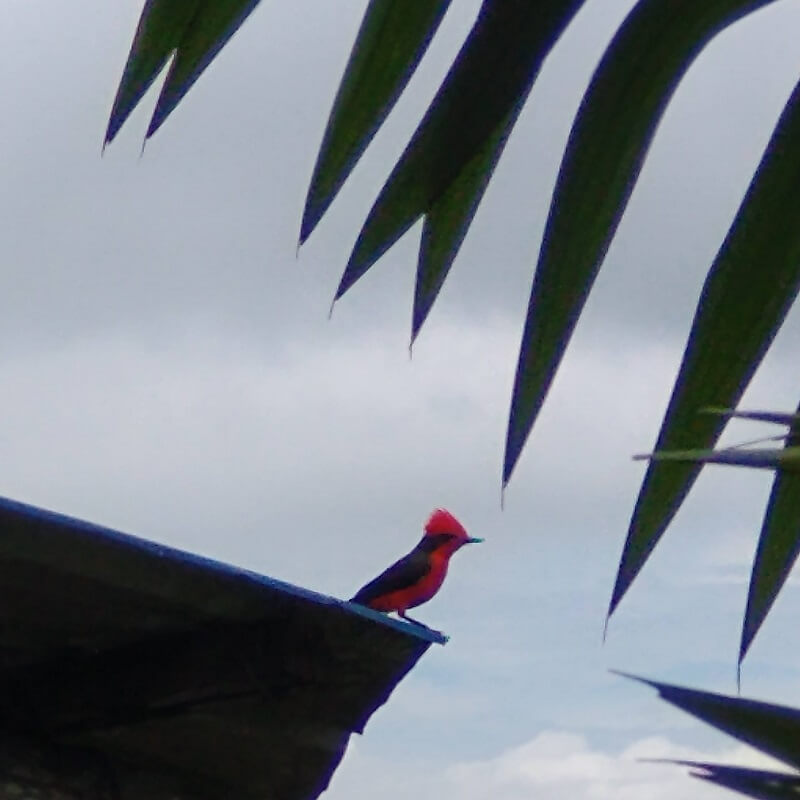
The farm is also certified bird-friendly, and we had the privilege of spotting so many incredible bird species, including several humming birds.  

Furthermore, they have invested in a small dry mill on the farm itself, which adds value, adds quality control and helps diversify income through servicing other small farms.  The brief connection last time in Colombia, followed up with conversation online and research came together perfectly.  

La Primavera grow both Castillo and Tabi, and with the altitude and care produce exceptional coffee, but for us at EA it is so much more than the coffee itself.  We start there and it has to be good, really good speciality coffee, but its the heart of farmers like Francisco and his family that makes the difference.  The desire for a proper, fair trading relationship, a friendship, and then their care and attention for the coffee, the environment, and the ten families they support year-round.  We loved this visit – and the first crop should be with us early 2024.

Gacheta-Junin

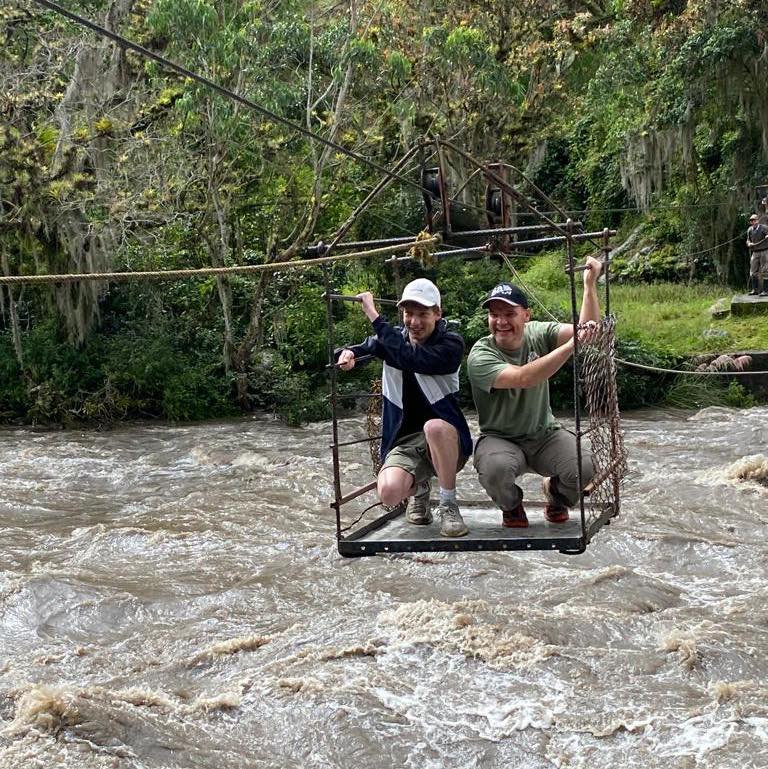
The small region of Gacheta-Junin, north east of Bogota, is separated by a river whereby half is accessible by road and the other completely cut off. So to get coffee from one side to another they need donkeys to transport coffee sacks down to the river where it is then hoisted across on what can loosely be described as a tray on cable, even if the river is raging. It’s mad!!!  

Other highlights involved walking up to Alfonso’s farm with him at over 1800masl, and drinking coffee on Dora’s farm.  

This is a community with great coffee, and we think we can help build a sustainable relationship to improve income over time, and help invest in a nursery to improve the quality and robustness of saplings for new crops. Watch this space as plans unfold over the next few years. 

Reflections

I’ve been doing this more than 15 years, hunting good coffee and communities to work with.  The normal 3+ hours of winding bumpy roads. The normal characters. The normal stories and experiences. The normal beautiful individuals and families. The normal happy welcome.  Yet none of it is normal. Its exceptional.  And after more than 15 years it is still special, emotional, exciting and rewarding. I love what we do, and I love that we can do business this way, challenging the status quo of me me me, take take take, to share the journey; to be honest, fair and put relationships first. To want the best for those we work with not just for ourselves.   Coming back and reflecting . . . .  

Firstly, great coffee doesn’t just happen it takes knowledge, learning, and dedication to produce and consistently produce from farm to cup.  That’s why we love the connections and relationships we make for the whole process; the constant learning we do; and of course the end result. It’s teamwork.  From the farmer, to the roaster, to the barista we all have an important role to play.  

Secondly, there is so much power in business to do good. I hope we can continue to challenge ourselves to keep doing better, doing more, and taking both our social and environmental responsibilities to new levels.  But also challenging the status quo of business in general to be about more than just profit.  We love what we do, we love the impact we can have, the relationships we make, and the fun we have along the way. 

Origin Report: Brazil

Brazil Vira Mao 2022

From Colombia, onto Brazil . . . . flying 6 hours across the continent; across the great Amazon rainforest, down into Sao Paulo.

From Sao Paulo airport I’m met by Athos & Isaltino, who I’ve known for 12 years now and we spend the 4-5 hours car journey back high up into Sud de Minas reminiscing and catching up on family, business and football.

I stayed 5 days in the small town of Machado, visiting farms and farmers, and it was joyful.

Initially with the Caixeta family on Vira Mao Fazenda (farm) – the whole family were there, we ate together, talked, laughed, walked the farm and chatted about the new exciting future they are investing in there. New varietals being planted, new trees (40,000 already!) which should give healthier larger crops in the coming years. Isaltino’s brother Ivan has moved back to live on the farm, so they will now work together to really develop the farm, improving the coffee further with new plants, better selective processing, and new dryers. An overall reignited passion and commitment to this farm, which will now provide a lot of our Brazilian coffee going forward.

It’s been a great relationship for more than decade now and it was an absolute joy to see them thriving not only financially but thriving as a close extended family.

A good crop last year means a reduced crop this year as trees recover, so questions being asked here as well as Colombia what that means for global supply and therefore coffee prices.

Ian in Brazil 2022

Staying in Sud de Minas, but moving more to the sitios (much smaller, remote farms), I linked up with Demilson and Herico from Legender, again long-term friends in this part of the world, with a wealth of coffee experience, and a passion for these rural communities and the coffee they produce.

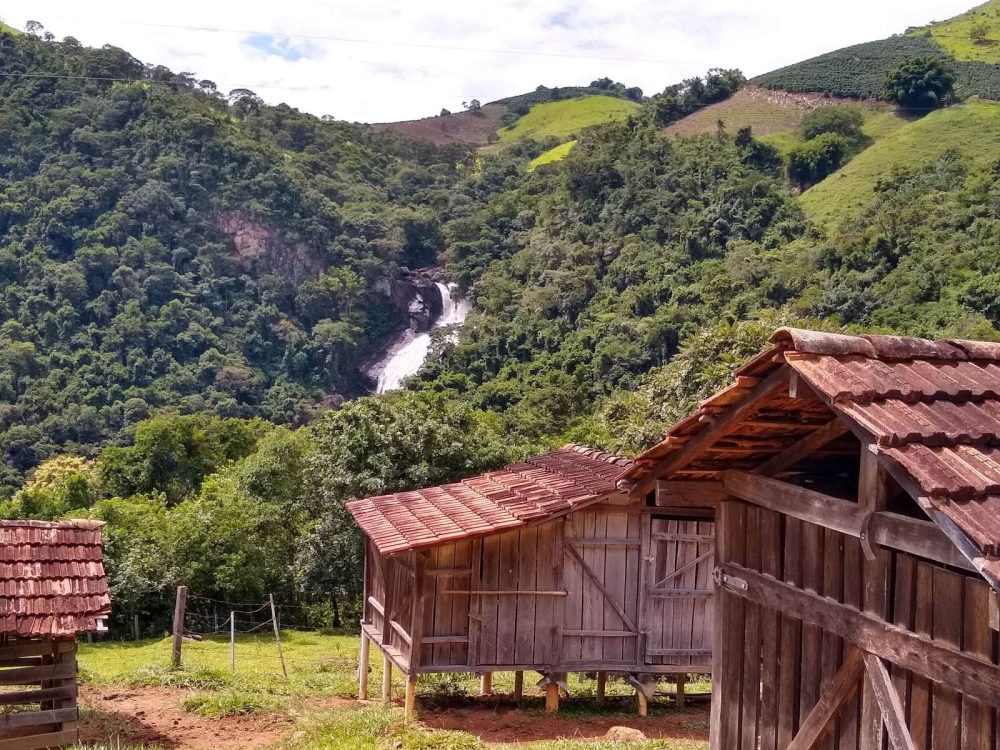
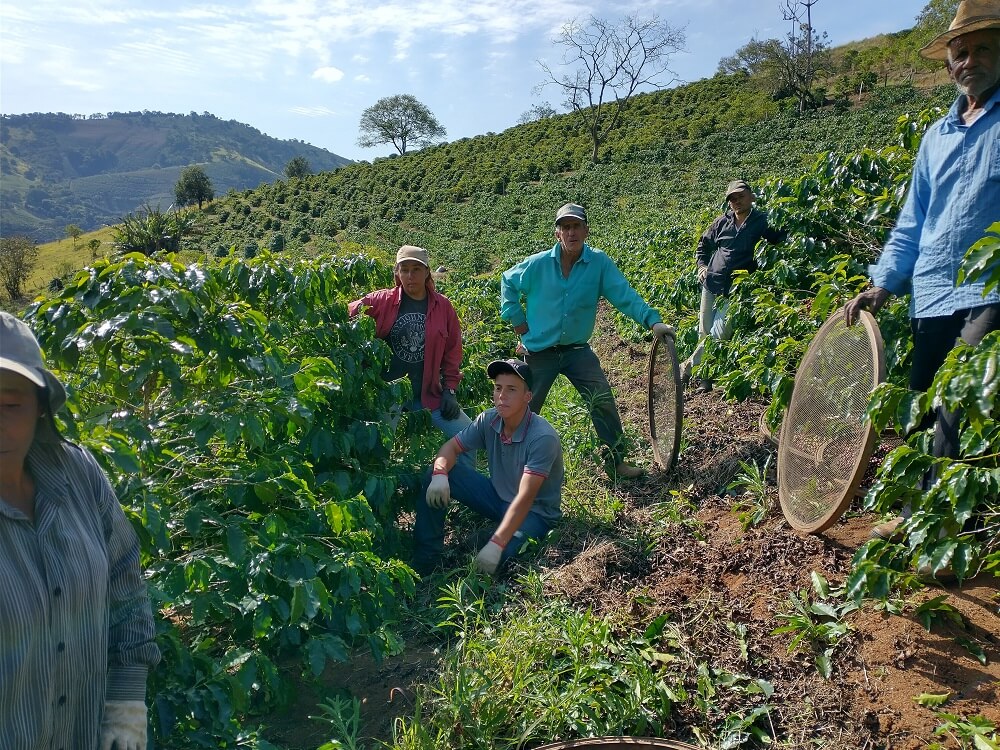
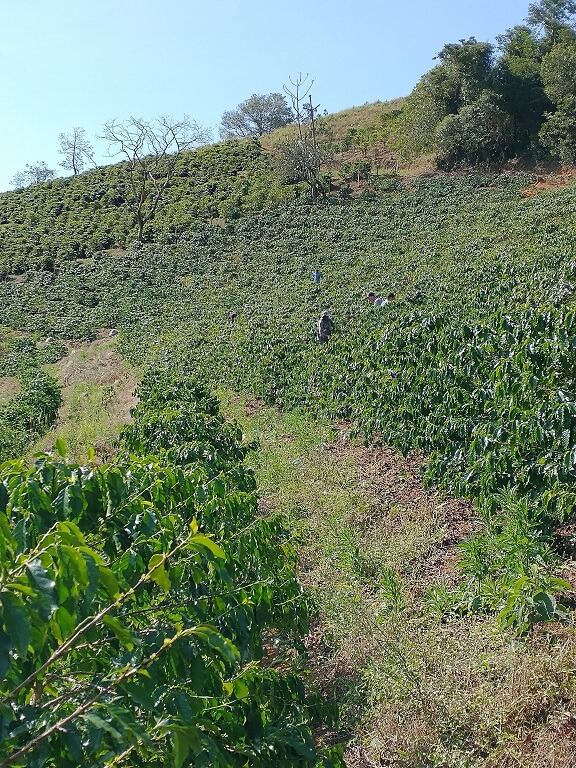
First to Jacutinga, to visit Osmar and his family up by the waterfall where we have been buying coffee for the past 5 years. But they weren’t home, so we abandon the car on the rough track and hike up 350m into the fields to find Osmar and his family picking at the start of this years harvest. After pushing through the branches and getting to them, only then are we cautioned to ‘look out for snakes!’

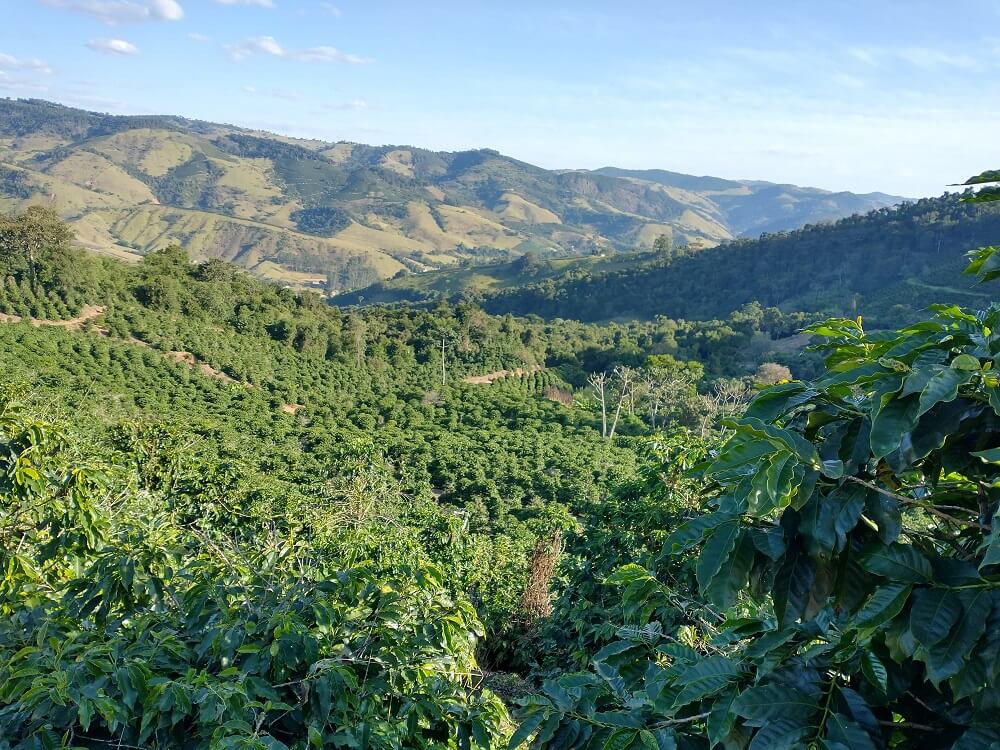
The view is incredible as always and they were so pleased to see us. I felt like we were interrupting but they were so welcoming, and even didn’t get mad when I dropped some of their picked coffee trying to sift it. We stood in that beautiful scenery telling stories, chatting, laughing, picking coffee and reaffirming our commitment to buy their coffee, whilst encouraging them in their attention to detail and quality of their work.

It’s hard, hot work for long hours in the fields, and they care so much about being selective and drying it well as a natural processed coffee – they deserve to be paid well and to have a sustainable future for their family. Diversification of crops will help, but maintaining long-term relationships, commitment to buy quality and fair prices are where we can play our part.

Leopaldo with his Grandmother

We also visited Posses community, Lavrinha and Serra Negra where we hope to be buying smaller lots in the future. Paulo, higher up at 1250masl is growing a new variety – Arara – a sweet yellow cherry offering a different flavour profile whilst also being more hardy and resistant to disease. We’re excited to cup this from the first harvest later this year.

Leopoldo lives with his grandmother, and is a creative character managing bee-hives and investing in processing on his small family farm. Ian was the first foreigner to ever visit their farm. Despite being a humbling experience for him it didn’t stop him enjoying coffee roasted traditionally over the fire, with cake.

This trip reminded us and reinforced our passion for people, for doing business
well and the highest of values, true and honest relationships; and reminded us that certain facts and knowledge can’t be gained without being there, seeing it first hand and having conversations face-to-face. Opportunities and understanding would simply be missed. 


Origin Report: Colombia

It was just so good to be back on the road again, back travelling after two years of lock-down, not allowed to travel, with limited communication overseas, especially with the smaller villages and more rural communities.

We spent some of lock-down reaching out and exploring new potential connections in new origins for us. So back on a plane in May our first stop was in Colombia, one of the most famous origins for coffee, of course, incredible countryside, super-high altitude (which is good for Arabica coffee) and generations of vast experience in coffee farming.

We met with Angela, a farmer only an hour or so from the capital, Bogotá, and then flew to Armenia, Quindio, a well-known region of coffee in the country, to spend time with Felipe and his family, who not only farm themselves, but also work regionally with dozens of small family fincas (farms) helping them improve their coffee and have a better route to market, reaping higher rewards for their hard work.

We had the privilege of drinking coffee as high as 2,000masl with Cesar and his family after a hike (‘hike’: slip/slide/fall in torrential rain!) around his farm to see different varietals and his organic methods of growing on very steep slopes in the middle of wild rainforests and beautiful scenery as far as the eye could see. They were a beautiful family, living a simple life, but a thankful life – a real highlight of the trip.

We also got to cup and experience some of the new processes of fermentation and infusions that some farmers are experimenting with to try and draw out different flavours, acidity and more to. This was good to understand more fully by seeing these processes first-hand, but also to cup so many different varietals and fermentations and make comparisons. Particularly fruit flavours from the natural coffee is accented through fermentation. 

But Colombia washed coffees are well-known, and appreciated worldwide, so we also got to cup plenty of these with smooth notes of sweet chocolate, and caramel.

Colombia 2022 Coffee Taste Testing

But of course, as you know for EA it is not just about how good the coffee is, it’s the story behind it, the family who grow it, their care for the environment, how they farm, and further how we can help in any way, obviously paying well for the care and hard work, but also looking to invest in developing their farm or in social projects in the wider community. So these were the opportunities we were seeking out – who should we be working with long-term that will match our ethos to marry exceptional coffee with care for the environment and improving lives in coffee growing communities.

We believe business can be such a powerful tool for good, to help everyone along the trading chain to not only live a better standard of living, but a more sustainable improved lifestyle.

Two stand-out moments for Jack & Ian were meeting with Angela and the conneciton made of matched values and passions that we now hope will develop into tangible business long-term, and impact with farmers.  And secondly visitng Finca Esmerelda, with Ceasar and his family – thankful every day they wake up in the surroundings they live in and the people they have around them. Just thankful for all they have.

We have nothing nailed-down as a direct trade connection (yet) but really positive options, that match for us, and we’ll be exploring these for a permanent, sustainable model of trade for good coffee and social investment over the next few months. It’ll probably need another trip to secure it (oh well!).  Lots of options, lots to be decided.

Of course we saw the farm, Casa Negra, where our Colombian coffee currently comes from. And moving forward in the short-term we will be working through partners to bring excellent Colombian coffee to our roastery for customers to enjoy, and some guests from small family farms that offer a taste of Colombia and the variety it has to offer.

We press ahead with EA’s passion and model to work as directly as possible with farmers and communities where we can secure great coffee and maximum impact by doing good business this way.

We left tired and happy, reflecting on the value of relationships in our global community, but also how precarious our environment is. How precarious the coffee world is and prices so volatile from crop yields, environment and weather, before global crises, demand, transport complications, currency and market changes even get involved. More on that later.

On to Brazil . . . 

Brazilian News Archive

Great Brazilian Coffee Direct

This year we started a new feature on our journal and through social media where once a month we highlight one of our single origin sources. This month it’s our Brazilian Gerezim. 

We thought it would be a great opportunity to share some of the original newsletters that we sent out in the past that chart our journey with the Caixeta family.

This journal blog post features issues four, five and six of the Daily Espresso that were published between 2010 and 2011.  Enjoy.

Table of Contents

June 2010

Back 3 weeks now and ready to share some great news. Ethical Addictions will now be working DIRECT with farmers in Brazil to deliver the great Brazilian roast coffee we are known for, direct from the farm, making a real difference to the workers and their families. 

We at Ethical Addictions set out 4 years ago to supply the best coffees whilst making a genuine difference to the farmers and the coffee growing regions. During this period, as we have sourced award winning coffees, we have made relationships with farms and villages in Africa. 

As we’ve grown it now makes sense to expand our dream and values to work with other farms. Our Brazilian Rainforest coffee comes from a family farm in the Minas Gerais region, near Sao Paulo.

The founding of Gerezim Fazenda

It’s history is best heard through the words of Athos Caixeta: 

❛❛

“After four generations the tradition in the coffee growing keeps very strong and alive in the life of the family Franco Caixeta and for sure it will be continued for much more because the coffee business it is some that is in our genes.

Everything started more than 140 years ago, when Isaltino (my great-grandfather) moved from Paraná state, to south of Minas Gerais, region today well-known for producing the best coffees of the country. He established his home at the city of Machado, where he began to plant the first seeds of coffee. At that time, it was need to do all work manually, a very hard work that lasted several years.

But after all that hard work, he realised that he was at right place to grow coffee. The soil and the climate in that area have shown great for this culture, besides altitude higher than 1000m, a good base for producing high quality coffees. 

Today, my father, Isaltino Franco Caixeta, is the responsible for the Gerezim Farm and Vira Mão Farm, two farms inherited that keep the same tradition of producing good coffees respecting the environment and helping the collaborators of the farm get a better life.” 

❜❜

Brazilian roast coffee

A direct relationship at a fair and sustainable price is a dream and a prayer of Athos and his family for many years. 

Join EA on on a journey to enjoy great coffee sourced fairly, sustainably, and direct.

December 2010

Ethical Addictions is 4 years old now and I’m in reflective mood as we approach the end of 2010. Sometimes the day-to-day doesn’t reflect the passion and story we’re trying to live out.

Here is a well known story I want to share from Loren Esiley’s The Star Thrower.

❛❛

Once upon a time, there was a wise man who had a habit of walking on the beach before he began his work. One day, he looked down the beach and saw a human figure moving like a dancer. He smiled to himself at the thought of someone who would dance to the day, and so, he walked faster to catch up. 

As he got closer, he noticed that the figure was that of a young boy, and that what he was doing was not dancing at all. The boy was reaching down to the shore, picking up small objects, and throwing them into the ocean. 

He came closer still and called out “Good morning! May I ask what it is that you are doing?” The boy looked up, and replied “Throwing starfish into the ocean.” “I must ask, then, why are you throwing starfish into the ocean?” asked the startled wise man. What’s the Story? To this, the boy replied, “The sun is up and the tide is going out. If I don’t throw them in, they’ll die.” 

Upon hearing this, the wise man commented, “But, do you not realize that there are miles and miles of beach and there are starfish all along every mile? You can’t possibly make a difference!” 

At this, the young man bent down, picked up yet another starfish, and threw it into the ocean. As it met the water, he said, “I made a difference to that one!” 

❜❜

At EA this story epitomises what we’re trying to do – make a difference one small step at a time. Our journey so far includes so many difference-making stories: from the small villages of Kilimanjaro, to the family-run Gerezim Farm of Brazil whose first shipment has now arrived in the UK. 

We’ve seen lives changed by paying premium prices, investing in the infrastructure of the farms, supporting social projects in the villages, as well as charity work with orphans in Uganda. 

And through all of this we’ve had the joy of drinking great Brazilian roast coffee and sharing it with you. 

None of this would have been possible without our customers – business and at-home alike, we’re thankful for you and for your partnership in making a difference Thank You

Our commitment to the farms is unwavering and we looking forward to the next chapters of these stories. Join EA on a journey to enjoy great coffee sourced fairly, sustainably, and direct.

October 2011

This was the title of the email we received last month from Athos, at the Gerezim Farm in Brazil. Simple translation – the export of eco/organic coffee to England. 

We’re thrilled to be continuing with our direct trade relationship with Athos and his family in Minas Gerais and can announce the imminent arrival of this years Brazilian coffee crop – ready for roasting in early 2012. The upward movement in coffee prices again this year has once again been reflected in the price we have agreed and can confirm they are pleased not only with the premium price they are receiving but the committed relationship in which we are conducting business with them.

It’s a tough time for businesses and individuals alike and we’re aware we trade in high quality and high ethics therefore not being the cheapest – but we never intended to be – Ethical Addictions has always been about the best coffee, and the best way to trade. 

None of this would have been possible without our customers understanding and appreciating that and believing in the excellent value we supply. 

We’re thankful for you and for your partnership in making a difference.

Thank You

A little guest has arrived. Colombia Cauca

A little guest has arrived. We’re exploring opportunities to partner and work direct in Colombia and came across this fantastic Colombian coffee, with a great story too.

Argelia in the region of Cauca, is a remote place and this project is designed to educate and provide investment to assist farmers to increase coffee production along with an incentive to move away from coca production. If you love Colombia coffee beans then you should check this new Single coffee origin out. 

Tasting notes: toffee sweetness and nuts, marzipan and apples with citric acidity.

Newsletter: Jack & Jacutinga

Summer 2019

Beautiful scenes, beautiful coffee

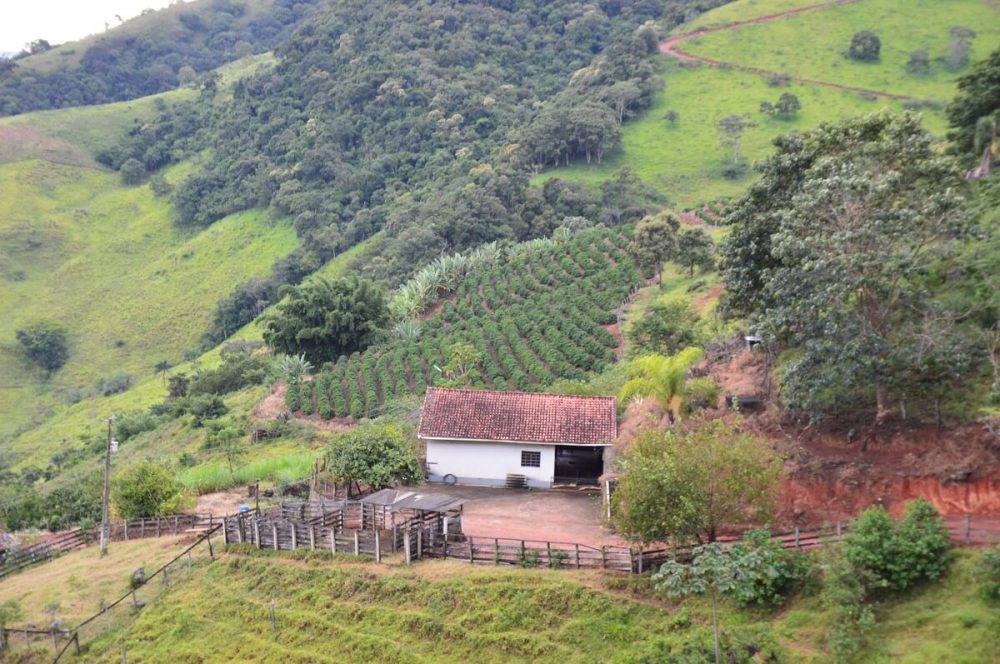
This is Jacutinga, ethically sourced coffee from a small coffee growing community high in the hills of southern Minas Gerais, Brazil.

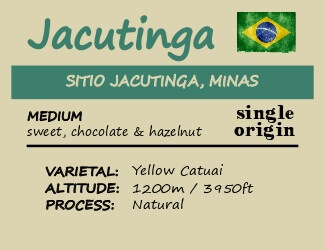
We’ve been back to buy the crop this year and meet with Osmar and his family. The more they understand speciality coffee, and the benefits of taking extra care, the better the coffee is becoming. It’s already cupping in the mid- to high-80s, and offering a full rounded sweet cup, with chocolate and hazelnut notes. And it is grown 1200m high up in the most beautiful scenery.

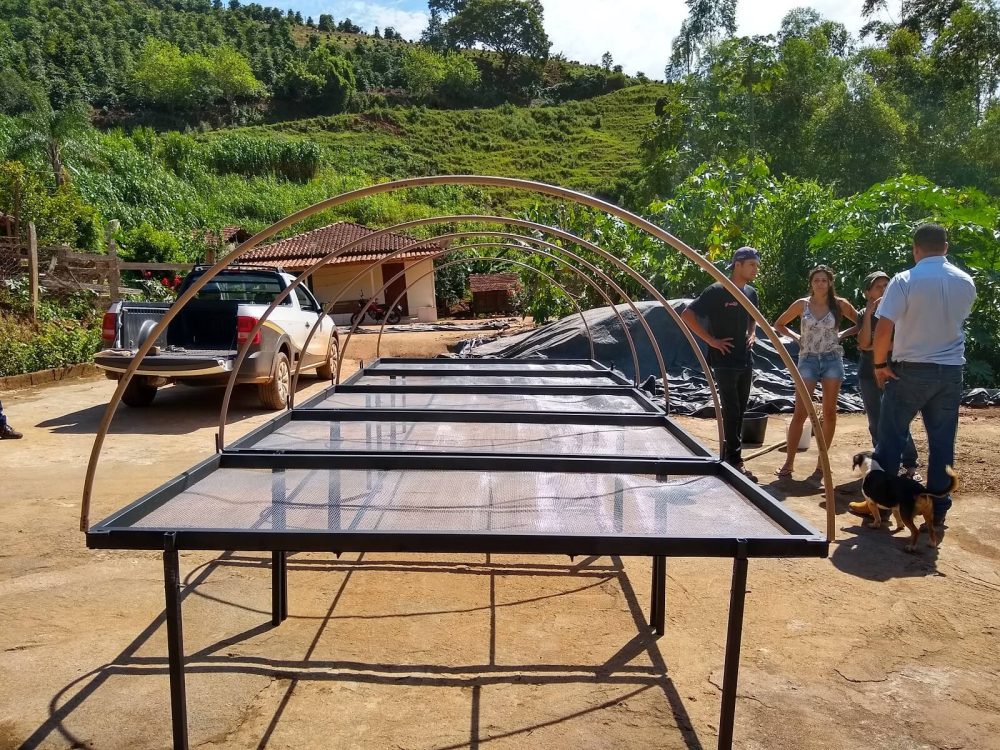
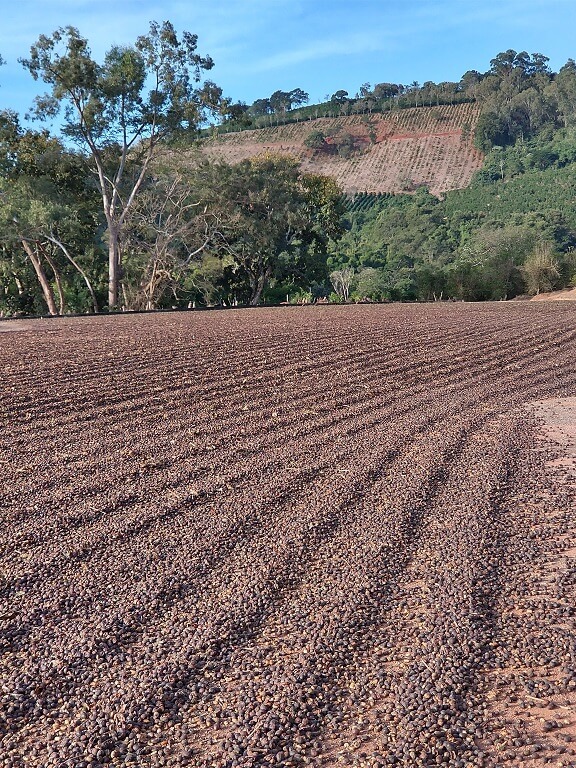
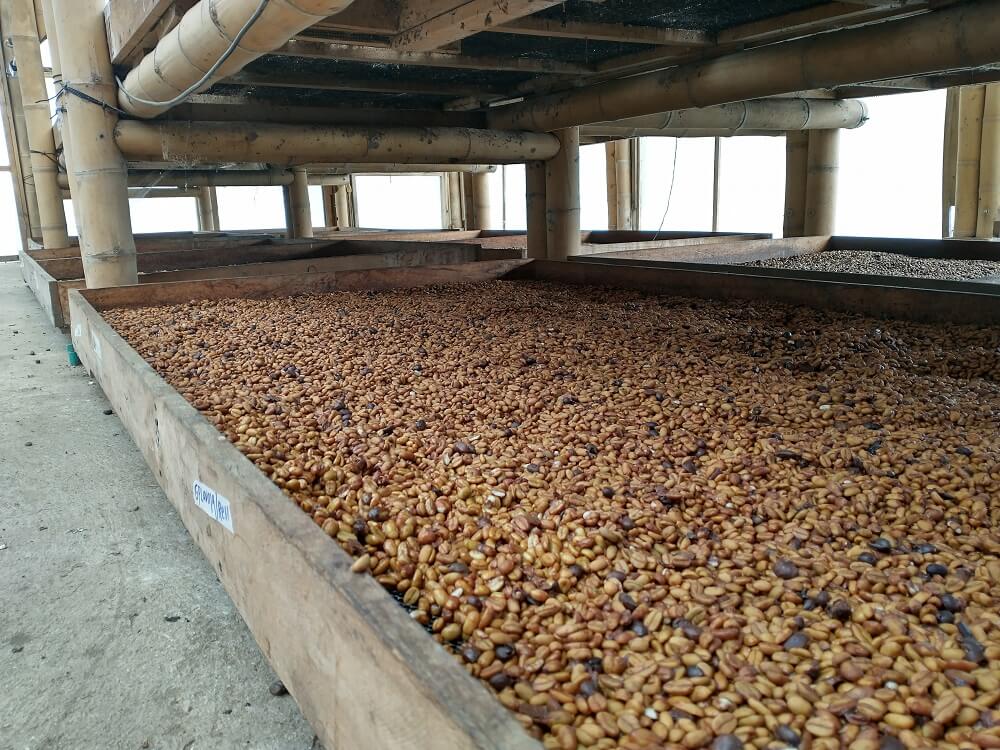
One of the projects we’ve invested in through a social premium per bag is to fund raised drying tables which Elton is keen to use for his crop. These should dry the beans more uniformly, and avoid any contamination reducing rejections. Here’s his mum, Gorete, checking on the first pick to be dried this way. Can’t wait to cup it!

News for next time

brazil jacutinga taste guide

Jack of all trades!

Jack has joined the team full-time and adds a lot of energy and enthusiasm to the office and warehouse – which we love!

He is passionate about coffee and about the way we trade so he is keen to learn and travel to the farms.

What most excites you about working with EA?

Loud, lively and very tall.

Give us 3 words to describe you?

Being able to make a difference where it matters, and having a good time in the process.

What will your role be here at EA?

We all do a bit of everything, but I will mainly look after new customers, training, as well as packing up orders and deliveries.

What's your favourite coffee right now?

Grizzly Brown Bear Coffee through a V60 dripper. I love the dark roast blend.

Brown Bear Coffee bag in roasted coffee beans
Ethical Addictions Coffee Roasters
Privacy Overview

This website uses cookies so that we can provide you with the best user experience possible. Cookie information is stored in your browser and performs functions such as recognising you when you return to our website and helping our team to understand which sections of the website you find most interesting and useful.