Ethical Addictions Logo link to homepage

Fine Food Digest ‘Best Brands 2020’

We have been voted one of the UK’s best brands by independent retailers in the latest issue of Fine Food Digest. the magazine is read by independent delicatessens, farm shops, food halls and speciality food buyers. The best brand survey  was created by asking buyers in farm shops, food halls and delis around the United Kingdom to name their top-selling lines. It was conducted during September, October and November 2019 via telephone conversations and email. Those products mentioned the most are the ones that appear in the lists are the ones most mentioned by the readers. There are a lot of ethical coffee companies out there so what makes us stand out from the crowd?

The article states:

The field of results reflected independent’s local preference. Lots of retailers are doing very well by working with local roasteries and plenty are developing their own bespoke blends to serve in store and sell in bags. Ethical Addictions has strong brand values in terms of sourcing and they clearly offer the right balance of quality, variety and ethics to get them noticed. That’s no mean feat given the veritable sea of beans and roasteries in the UK at the moment!
Read Online

Measuring our impact on the environment

One of our passions at home and overseas has always been to find affordable and practical ways to minimise our environmental impact and reduce single-use plastics.
As you may know we already do a lot, but recently we’ve been able to do more, and have some further creative ideas in the pipeline. You can read a lot online about the overseas work on forest preservation, and water reduction. But for EA in the UK here’s a reminder of what we do, and some new ideas:

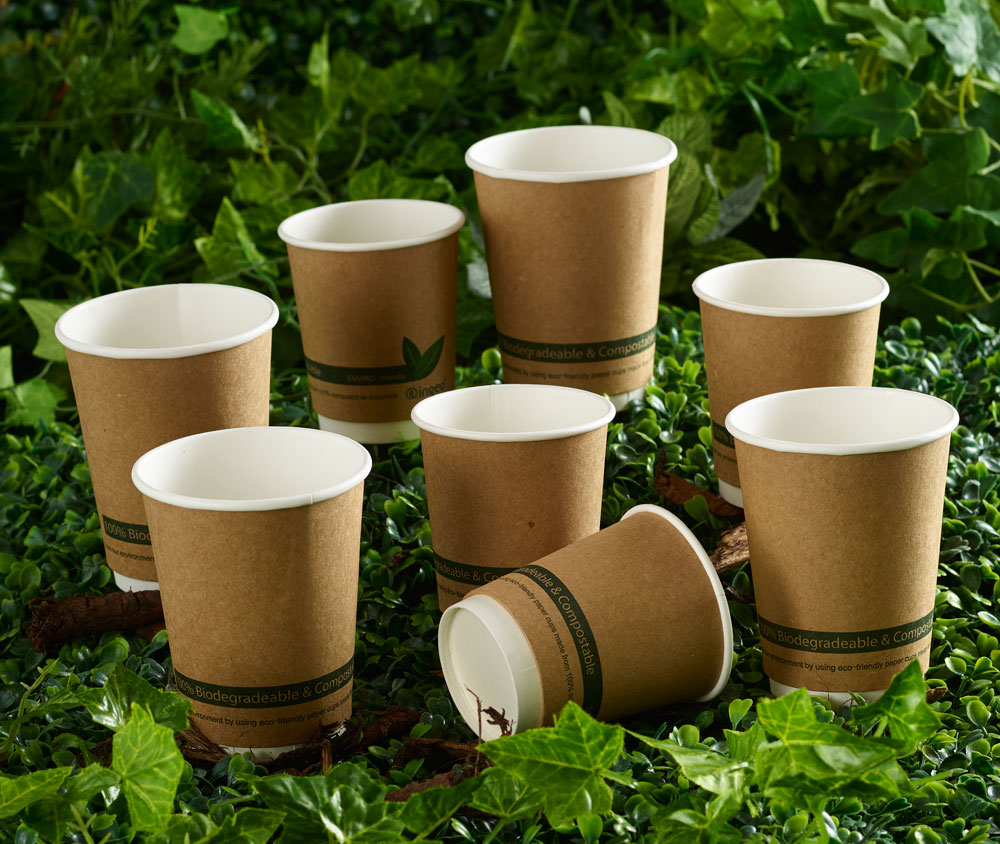
  • all take-out supplies are plastic-free, compostable / biodegradable
  • re-use packaging where possible
  • return packaging to suppliers for re-use e.g. polystyrene
  • courier service uses paper labels instead of plastic windows
  • our courier, DPD is also trying to lead it’s field in eco credentials
  • packing tape switching to kraft paper not plastic where possible
  • bulk paper sack option to reduce packaging on coffee
  • in regular discussions with waste company about better recycling and zero landfill options
  • most weeks we only produce one black bag of waste

If you have more ideas for us, even better . . . please share.

A truly eco-friendly cartridge water filter – made in Britain

iX FILTER – for great hot beverages

UK MADE  |  COST EFFECTIVE  |  ECO-FRIENDLY

The iX filter is the first eco-friendly ion exchange cartridge filter, offering an internal refill to provide a genuinely sustainable and cost-effective alternative to mainstream cartridge filters. 

Designed for use on coffee machines, espresso equipment and other drinks machines. 

 

Save money, save planet
Re-usable filter housing – just replace the inner resin tube refill for extra savings and less waste.

Excellent performance
Specially formulated ini-exchange resin with carbon block for excellent scale reduction and improved taste.

Fixed 20% blend for optimised flavour, aroma and crema.

Easy to use
Quarter turn release mechanism shuts off water supply for ease of maintenance. Push-fit connections on head. 

Dr Peter Griffiths on BBC World Business Report

Lead article of the rport (approx 7 mins) – interesting on both sides, and fair. Exresses much of what we have experienced on the ground and been saying for years. Worth a listen.


From Peter Griffiths:

Fairtrade Foundation UK will not appear on a platform with me because I produce hard research evidence and they produce only anecdotes, so the BBC got someone from the Netherlands. Note that he does not give figures for extra amount paid by consumers, amount going to the Third World, or any extra amount paid to farmers. Nor does he suggest that there is any impact study meeting the standards of the development agencies (there are not). And he does not mention that the Chief Executive of Fairtrade International and a range of researchers have said that the auditing and monitoring of the system is woeful.

New research on Fairtrade

‘Ethical Objections to Fairtrade’ by Peter Griffiths has just been published in the Journal of Business Ethics


It quotes a wide range of academic field research and information provided by Fairtrade itself. Its conclusions are:

The Fairtrade movement is a group of businesses claiming to trade ethically. The claims are evaluated, under a range of criteria derived from the Utilitarian ethic. Firstly, if aid or charity money is diverted from the very poorest people to the quite poor, or the rich, there is an increase in death and destitution. It is shown that little of the extra paid by consumers for Fairtrade reaches farmers, sometimes none. It cannot be shown that it has a positive impact on Fairtrade farmers in general, but evidence suggesting it harms others is presented. Many of the weaknesses are due to an attempt to impose political views on farmers and others.

Secondly, the unfair trading criteria require that sellers do not lie about their product, nor withhold information that might alter the decisions of a substantial proportion of buyers. It is argued that the system only can exist because of the failure of the Fairtrade industry to give the facts on what happens to the money and what it can be proved it achieves. This unfair trading compromises the reputation of charities in general.

Much of the trading may constitute the criminal offence of Unfair Trading in the EU.

Peter Griffiths says: “I have worked on food and agricultural marketing in 30 countries around the world, for governments, the EC, the World Bank, UNDP, FAO etc. Few people would claim my knowledge or experience of this subject, which is where Fairtrade operates.”

Source: http://www.griffithsspeaker.com/Fairtrade/why_fair_trade_isn.htm

You can read the full article  here: http://www.griffithsspeaker.com/Fairtrade/Ethical%20Objections%20to%20Fairtrade%20web.pdf

New research on fairtrade

An interesting research article on fairtrade from the Institute of Economic Affiairs.

Fairtrade Without the Froth is available in summary or in full on the IEA here

Summary

  • Fair Trade is part of the market economy and is not, in any way, in opposition to free trade. Fair Trade sales have grown enormously in the last few years.
  • Fair Trade brings certain benefits to producers, such as guaranteed prices, a social premium and the enforcement of particular labour conditions.
  • These benefits may not be as great as many of Fair Trade’s proponents imply. For example, if the market price falls below the guaranteed price level, though the guaranteed price will be paid for any Fair Trade purchases, the quantity of produce that will be bought from the producer is not guaranteed.
  • The benefits of Fair Trade also come at a cost. There is a levy on the wholesaler as well as a certification charge for producers. The certification charge starts at £1,570 in the first year – a huge sum of money for producers in the poorest countries.
  • Fair Trade does not focus on the poorest countries. Fair Trade penetration is greater in middle-income than in poor countries.
  • Criticisms of Fair Trade are also exaggerated. At its current level of penetration it is likely to do little harm in terms of distorting markets.
  • The benefits claimed by Fair Trade can also be obtained from the normal business relationships that exist between primary product producers and buyers. Attempts by proponents of Fair Trade to denigrate free trade and normal market practices are not helpful and distort realities.
  • Primary product producers will often gain much more by selling speciality brands of their product than they will from adopting the Fair Trade label.
  • Many other social labelling initiatives exist with objectives that are different from and often more transparent than those of Fair Trade. Attempts by Fair Trade to require schools, parishes and so on to stock Fair Trade goods can damage other social labelling initiatives or require very poor producers to suffer the bureaucracy and costs of obtaining multiple labels.
  • Fair Trade is not a long-term development strategy, and the model is not appropriate for all producers. It is also unable to address structural problems within trading systems. Fair Trade’s proponents need to show some humility and accept that it is a niche market designed to benefit some producers; nevertheless, it does achieve that limited objective.
Ethical Addictions Coffee Roasters
Privacy Overview

This website uses cookies so that we can provide you with the best user experience possible. Cookie information is stored in your browser and performs functions such as recognising you when you return to our website and helping our team to understand which sections of the website you find most interesting and useful.